https://doi.org/10.36253/bsgi-7567
Walking with/in Heritage Landscapes: Gazes, Limits and Slowness in the Ledro Alps and Judicaria UNESCO Biosphere Reserve
In cammino nel/col paesaggio-patrimonio: sguardi, limiti e lentezza nella Riserva di Biosfera UNESCO Alpi Ledrensi e Judicaria
1 University of Padua, Department of Historical and Geographic Sciences and the Ancient World, Italy
2 GSSI, Gran Sasso Science Institute, Italy
E-mail: margherita.cisani@unipd.it; etta.castiglioni@unipd.it; giovanna.dimatteo@gssi.it
Abstract. Heritage, often perceived as stable and fixed, is in fact constantly traversed and re-produced by multiple forms of mobility. This paper presents and discusses a process of mobile heritage making within the landscape of the Ledro Alps and Judicaria, designated as a UNESCO Biosphere Reserve. In this context, we collaborated with the local Ecomuseum in the organization and realization of three trekking itineraries throughout the Biosphere Reserve. These experiences aimed to engage both residents and visitors, fostering connections with the area’s natural and cultural heritage. We discuss the role of walking as both a mobile methodology for research and heritage co-creation, analysing the effects of collective walking on the participants and their roles. The analysis shows the presence of four levels of connections instantiated in the walking process: between cultural and ecological values, local and global scales, formal and informal heritagisation processes, and, lastly, insider and outsider perspective. Furthermore, we highlight the absence of a diachronic perspective that links the landscape’s natural and historical values to its near and long-term future. In conclusion, the paper calls for a renewed and critical gaze on slow mobilities (especially on walking itineraries) and on their role in the making of heritage landscapes.
Keywords: mobilities, walking, heritage, landscape, UNESCO Biosphere Reserves.
Riassunto. Il patrimonio, pur essendo spesso considerato e trattato come qualcosa di stabile e fisso, è sempre e ovunque attraversato e ri-prodotto da molteplici forme di mobilità. Questo articolo presenta e discute un processo di mobile heritage making all’interno del paesaggio delle Alpi di Ledro e della Judicaria, designate come Riserva della Biosfera UNESCO. In questo contesto, abbiamo collaborato con l’Ecomuseo locale all’organizzazione e alla realizzazione di tre itinerari di trekking nella Riserva della Biosfera. Queste esperienze avevano l’obiettivo di coinvolgere sia i residenti locali che i visitatori, favorendo la creazione di connessioni tra il patrimonio naturale e culturale dell’area. In particolare, in questo articolo discutiamo il ruolo del cammino come metodologia mobile di ricerca e di co-creazione del patrimonio, analizzando gli effetti della camminata collettiva sui partecipanti e sui loro ruoli. L’analisi mostra la presenza di quattro livelli di connessione attivati durante il cammino: tra valori culturali ed ecologici, tra la scala locale e globale, tra i processi di patrimonializzazione formali e informali e, infine, tra insider e outsider. Dall’analisi emerge l’assenza di una prospettiva diacronica che colleghi i valori naturali e storici del paesaggio al suo futuro prossimo e a lungo termine. In conclusione, il documento invita a rivolgere uno sguardo rinnovato e critico alle mobilità lente (in particolare agli itinerari a piedi) e al loro ruolo nella costruzione dei paesaggi del patrimonio.
Parole chiave: mobilità, cammino, patrimonio, paesaggio, Riserve della Biosfera UNESCO.
Contents
1. Mobilities and Landscape as Heritage
2. Nature Conservation and (non)Formal Heritagisation Processes
3. The Ledro Alps and Judicaria Biosphere Reserve: Walking with the Local Ecomuseum
4. Walking as Metodology: Effects on Partecipants and their Roles
5. Walking as Connecting Heritage, Scales, Processes and Perspectives
6. Conclusive Remarks and Research Perspectives
1. Mobilities and Landscape as Heritage
On 03 July 2022, a portion of the Marmolada Glacier collapsed, generating an avalanche of ice, snow and rocks and killing 11 hikers. Because of climate change, it has been predicted that the Marmolada Glacier will disappear by 2040 and that the detachment of the serac was most likely triggered by the hot waves experienced in Northern Italy in the preceding days.
This tragedy took place in a “heritage landscape”. The Marmolada Mountain is one of nine mountain systems included in the UNESCO World Heritage site in the Dolomites. It is enjoyed as a beautiful tourist landscape by millions of people every year in the summer and winter seasons and encompasses a complex network of ecological, historical and cultural values, some more visible than others, some more “authorised” than others. The Marmolada is one of the few remaining glaciers of the Italian Alps, and it’s not-so-slow melting process is a live demonstration of the movement that intrinsically inhabits all heritage forms and landscapes, often with unruly and unpredictable dynamics that occasionally result in fatalities.
Among the many necessary reflections in the face of such a tragedy is the massive tourist exploitation of mountains such as the Marmolada, which hosts many historic and traditional mass-tourism mobilities, such as a popular skiing destination, and is also a symbol of the growing eco-tourism industry, which sees walking, trekking or cycling as its main activities. Such slow tourism mobilities should contribute, at least in the intention of their proponents and promotional discourses, to the reduction of tourism impacts on the environment and the simultaneous increase in the positive relationship between the tourist and the local community.
This brief introductory example testifies to the fact that mobilities intertwine with heritage in multifarious ways: from the movement of heritage objects in space and time to mobilities as heritage objects themselves and from mobilities as tools to create, discover, promote and reconnect heritage sites or landscapes to mobilities as threats to the conservation of biocultural heritage sites (Silverman et al. 2017, Gravari-Barbas 2021). The heritage discourse often thrives on disconnection from ordinary or contemporary practices, and it does so not only in medieval towns or villages preserved “as if time has stopped” but also in other landscapes where the connection with nature is often intended as a disconnection from ordinary contemporary urban life. This disconnection is also reinforced by a common understanding of landscapes as a value to be preserved from change and to be enjoyed at a distance – as a scenery – not as the result of the interaction between human and non-human actors, physical forces and social dynamics.
Cognisant of these disconnections in discussions on landscapes as heritage and adopting a critical stance on landscape heritagisation processes (Pettenati 2022), we aim to discuss a particular experience that involves slow mobilities to foster the reconnection of people with heritage in its natural and cultural and local and intercultural hybridities. This perspective chimes in with a renewed take on mobilities, particularly on slow tourism mobilities, which is conscious of the rhetoric surrounding it but is also open to understanding the multiple potentialities of mobilities as relational and performative practices (Rabbiosi 2021).
Heritage is not just a representation of the past; it is also a connection or reconnection with the past that is active and alive in the present (Watson, Waterton 2017). Although heritage is generative of mobilities and, thus, contributes to climate change (and other landscape transformations), it is also needed to generate the “affective capacity” to act towards climate change mitigation (Harvey, Perry 2015, 7). Considering glaciers (or polar bears) as a universal heritage can contribute to a public awareness and mobilisation toward actions aimed at reducing the negative impacts of tourism and polluting mobilities in general.
According to Pettenati (2022, 10-12), migration, tourism, digitalisation, decolonisation and climate change are the major challenges involved in critically thinking and practicing landscape as heritage. All of the challenges are deeply connected to movements (and moorings), and therefore, they can only be addressed through an interdisciplinary understanding of im/mobilities. This process can benefit from the advanced debate around mobilities in the social sciences – from Urry and Sheller’s (2006) call for a new mobilities paradigm to recent reflections involving a more humanistic (and, therefore, historical) approach (Pearce, Merriman 2018; Biasori et al. 2023). Human geography, which critically and relationally considers landscapes, heritage, tourism and mobilities and their reciprocal connections, can offer an inspiring perspective on the mobilities in/of heritage landscapes.
2. Nature Conservation and (non)Formal Heritagisation Processes
Starting from this theoretical premise, we present some preliminary reflections from the analysis of one of the case studies selected for a broader research project dedicated to the exploration of formal and non-formal heritagisation processes in contexts characterised by various grades and types of proximity, especially relationships between practices of nature conservation (i.e. natural parks or heritage sites) and the fruition of heritage (i.e. tourism, recreational and educational practices).
It has been established that the function of protected areas goes well beyond the mere conservation of ecosystems and that conservation itself also depends on landscape management, transformation and use. These processes necessarily concern issues of identity, belonging, sharing and citizenship (Waterman et al. 2021), although they might also lead to landscape touristification and museumisation (Jansen-Veerbeke, Dewailly 1999; Ojeda, Kieffer 2020). Furthermore, the heritagisation of protected areas encompasses institutionalised initiatives carried out by organisations, experts and technicians as well as daily practices, discourses and narratives produced by various subjects (inhabitants, visitors, migrants, farmers, tour operators, etc.) who animate and co-produce the landscapes of protected areas and their heritage (Council of Europe 2000; 2005).
Consequently, our research project aims to observe both the institutional policies and grassroots practices of natural and cultural heritage conservation, management and enhancement. It seeks to develop an in-depth and critical analysis of the relationship between nature conservation and landscape heritagisation by identifying current trends and critical issues.
In areas such as the Marmolada in the Dolomites (and the case study setting described below), the proximity (and hybridity) between natural and cultural heritage, conservation and socio-economic activities and the various gazes of residents and visitors poses several challenges for the recognition, appropriation and active conservation of landscapes as heritage and as a source of current and future well-being.
In the following sections, we focus on an illustration and discussion of trekking experiences as walking practices able to activate multiple connections with heritage in the context of the Ledro Alps and Judicaria UNESCO Biosphere Reserve.
3. The Ledro Alps and Judicaria Biosphere Reserve: Walking with the Local Ecomuseum
Lying amidst the Brenta Dolomites and Lake Garda, the system comprising the Ledro Alps and the Judicaria valleys is an ecological and cultural corridor between the Po valley and the northern Alps1. Encompassing protected areas, home to endangered species such as the lynx (Lynx) and brown bear (Ursus arctos) and further characterised by remnants of pile-dwelling prehistoric settlements enlisted as UNESCO heritage sites, it was designated a UNESCO Biosphere Reserve in 2015.
The governance of the Biosphere Reserve (BR) is entrusted to a consortium between various municipalities of the area, which supports research actions, special projects for the conservation and promotion of the area and outreach activities. Among the latter category, the Judicaria ecomuseum, one of the actors promoting the institution of the BR, has been asked to carry out activities to raise awareness on the value of the reserve among the population.
Ecomuseums are initiatives that contribute to the implementation of the European Landscape Convention and the Faro Convention on Cultural Heritage (Council of Europe 2000, 2005), with the aim of promoting knowledge, conservation and enhancement of local heritage, often through a participatory approach (Borrelli, Davis 2012; Dell’Agnese 2016; Santo et al. 2017).
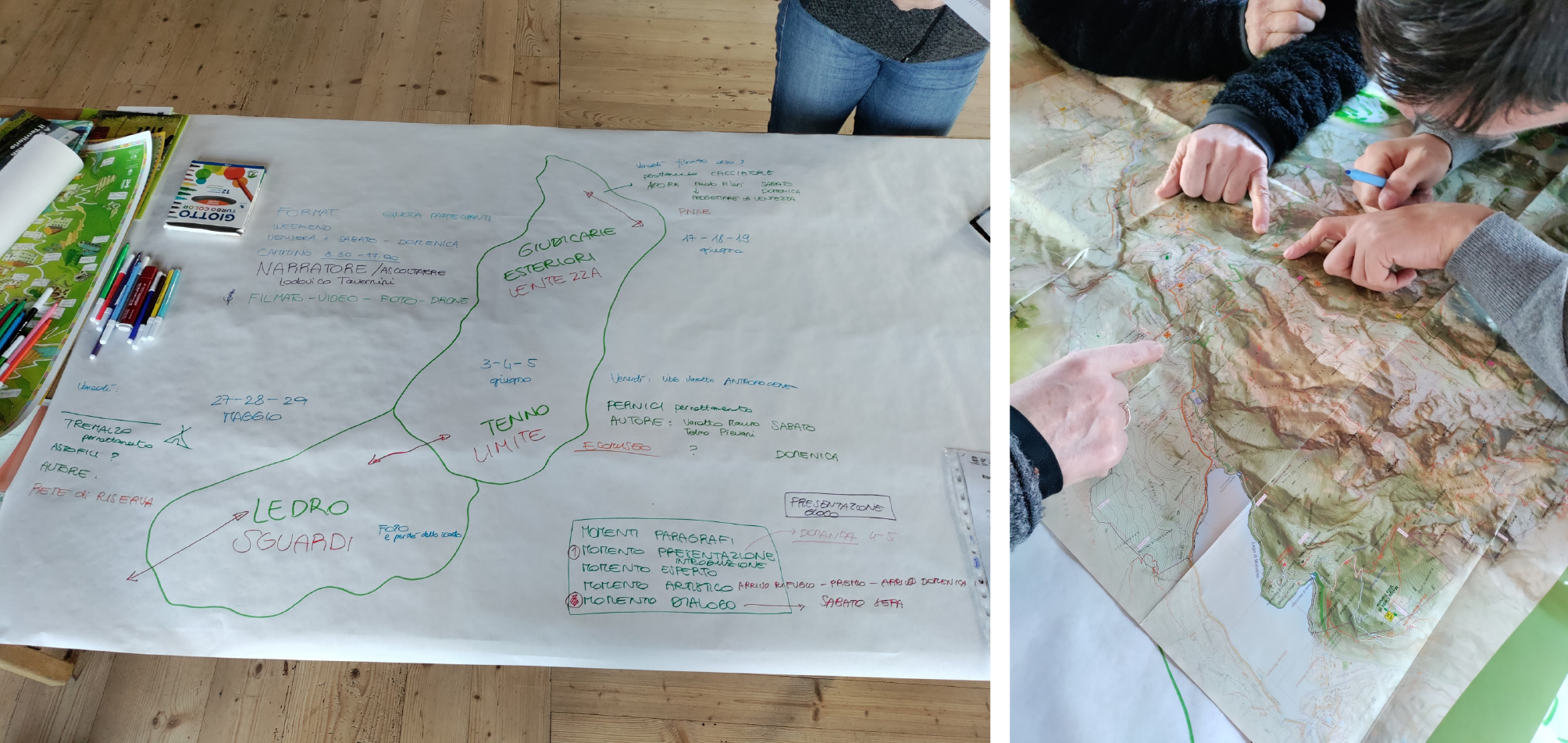
The Judicaria ecomuseum decided to adopt slow mobilities as tools to promote sensitisation and raise awareness of the heritage values of the local landscapes among residents and visitors of the area. To do so, the steering committee of the ecomuseum (Carmela and Diego) asked that we collaborate with them, given our experience on the topic of landscape education and awareness. During our first fieldwork exploration and preliminary meeting, the idea to organise three trekking experiences of two/three days each, from Friday to Sunday, was reinforced in a consistent and thoughtful structure of meanings and activities, encompassing walking and expert interventions, book readings, artistic performances and so on. This structure, conceived as a guide to elicit the values of the local heritage in connection with contemporary and global dynamics, revolved around three keywords synthesising the goal of the awareness-raising project: “gazes”, “limits” and “slowness” (Fig. 1).
Each weekend of this project called “In cammino nella Biosfera” (Walking in the Biosphere) was then conceived as an itinerary, both in a tangible and intangible sense2. The routes selected wound across the core areas of the BR, allowing trekkers to touch some of the most valuable ecological and cultural hotspots of the area (Fig. 2). In parallel, the thematic routes and proposed activities were structured to lead the reflection around each keyword (one for each trek) from a subjective to a global perspective, culminating with some considerations around the local context of the landscape.
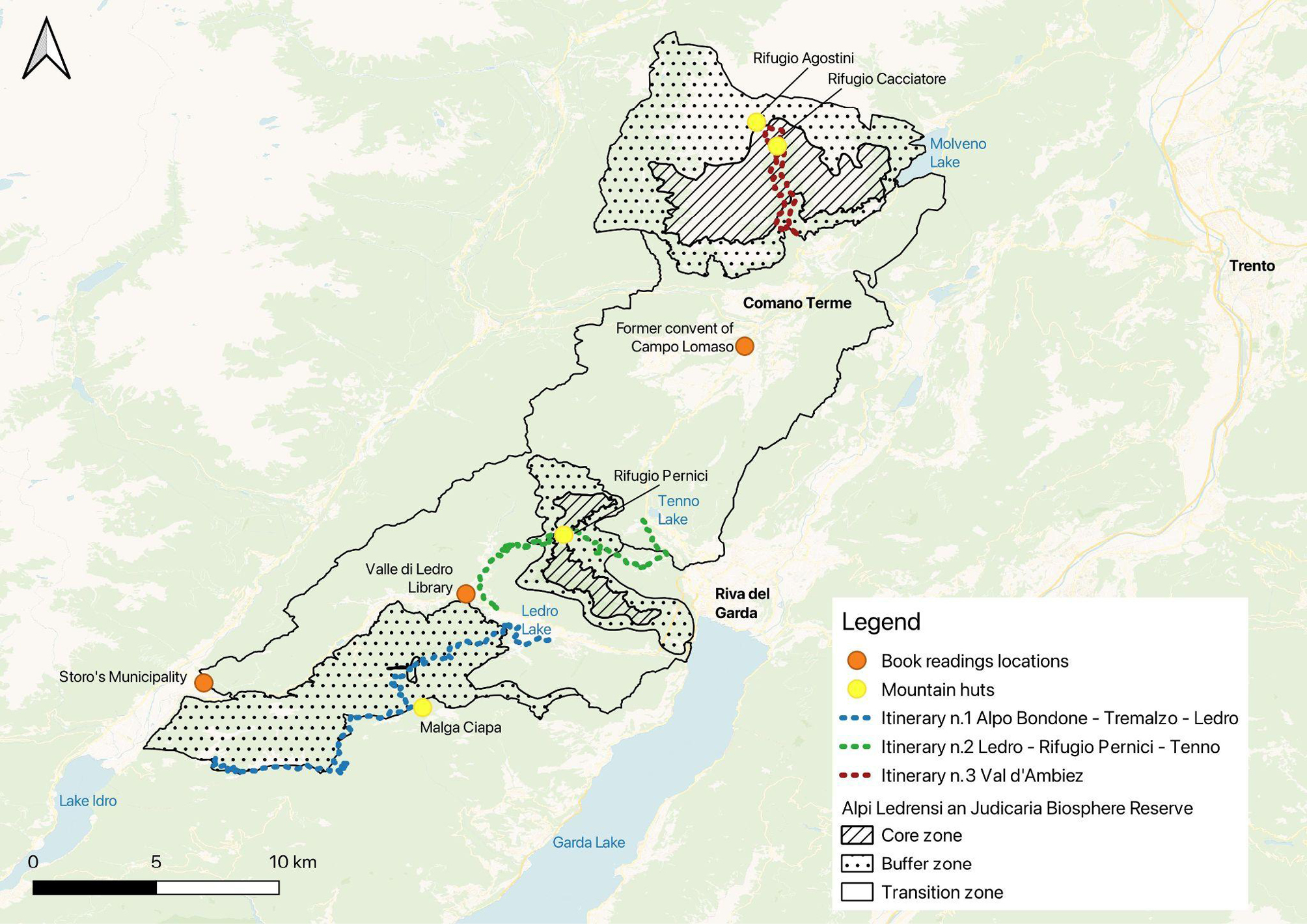
The weekends were also enriched by talks with experts, moments of discussion, observations of the landscape during the walk, debates among the participants and readings of book excerpts presented by the authors every Friday evening. Moreover, on Saturday and Sunday, the groups were led by local mountain guides in trekking itineraries. A noteworthy characteristic of the project is that the organisers sought the greatest participation of authors, experts and laypeople, adopting a horizontal approach and asking everyone to participate in the entire programme, or at least during a complete trek. The result was that the groups participating in the treks were composed of experts (organisers, guest authors, mountain guides and scholars) and laypeople (representatives of local associations, local inhabitants and visitors coming from various cities of Italy).
The first keyword, “gazes”, alluded to the recognition of the presence of multiple points of view on the landscape and its heritage values. It was therefore intended to shift the attention from the landscape, the nature “out there”, to us, the subjects “in here”, who were observing, perceiving and transforming it from a post-structuralist perspective (Wylie 2007). Two questions dominated this first trek: “Who are we?” “Which are the elements of the landscape?” The ways of seeing, interpreting and teaching the landscape are manifold (Meinig 1979; Castiglioni, Cisani 2022), and recognising this complexity is crucial for developing a relational, processual and political interpretation of landscapes (Crouch 2010; Johung, Sen 2013). Gazes are therefore varied, subjective, human and non-human; they are also part of cultural and global discourses around the heritage values of landscapes, the UNESCO globalising discourse being one of the most prominent and influential. The complexity of perspectives on the landscape was also reflected on the local scale in the Ledro Alps and Judicaria context, where the BR assumes different, sometimes contradictory, values.
The second keyword, “limits”, was also in plural form, representing the limits that define our subjective identities and the affordances of the landscape (Menatti, Casado da Rocha 2016), not as a restriction to overcome but as something to recognise and inhabit. This time, the question raised by this keyword was as follows: “What do we have or do not have here?” The limits of our actions and behaviours are also dictated by the way in which landscape resources are used and reflect a consumerist/ecological view of the relationship between humans and natural resources. On a global level, the Anthropocene concept, apart from some limitations relating to a human-centric vision (Castree 2014; Kirsch 2015), can help us recognise the limits we have overcome as a species and the effects of such overcoming, especially in terms of climate change and biodiversity loss. Moreover, the notion of Anthropocene landscapes might help us rethink how – on the local scale – the various processes of ecosystems and landscapes are transformed.
Finally, the third keyword chosen to guide the discussion and awareness process among the participants was “slowness”. Intended as a relational approach, slowing down is always something that requires the recognition of the different velocities at play – the fact that mobility is not ubiquitous and is equally distributed among the population and that it always implies fixity, built infrastructures and narratives, discourses and performance. These considerations derive from the complex elaboration of the concepts of mobility and mobility justice in the field of human and social sciences (Sheller 2018) and in relation to the meanings and tourist uses of slowness (Rabbiosi 2021a). “Where do we want to go” and “what do we want to connect and how” were therefore identified as the primary questions through which to probe slowness not only as a global discourse geared towards less speed-centric societies but also as a perspective grounded in the Ledro Alps and Judicaria landscape.
4. Walking as Metodology: Effects on Partecipants and their Roles
Having illustrated the theoretical and organisational structure of the three walking itineraries, it is worth clarifying our role as researchers, not just as organisers or participants. Adopting a public geography approach (Murphy 2011), we aimed to promote social change in and with the public through active research as well as advance geographical thought through participant observation and research action.
A growing amount of literature is exploring “slow” mobilities related to the recovery of ancient paths and routes to restore value and centrality to territorial resources, becoming an important tourist attraction and contributing to triggering local development processes, in left-behind or peripheral areas (Spagnoli 2022; De Felice, Mundula, Spagnoli 2023). In this case, rather than investigate this aspect, we look at slow mobilities as an engaging experience to promote awareness on the Biosphere Reserve territories, as a precondition for the subsequent development of regeneration initiatives. As suggested by Cerutti and Menzardi (2022), some forms of walking can produce strong involvement and territorial value. This includes those that they define as “participatory treks” (Cerutti, Menzardi 2022, 62) in which inhabitants and visitors share walking initiatives organised, managed, guided by the local communities themselves (Figure 3). Moreover, walking routes aim to propose a reworking of the meaning of heritage also through the experience of various forms of encounter and interaction with local communities and heritage values (Baiocchetti, Zanolin 2022; Rabbiosi 2021a; 2021b; Mariotti et al. 2015).
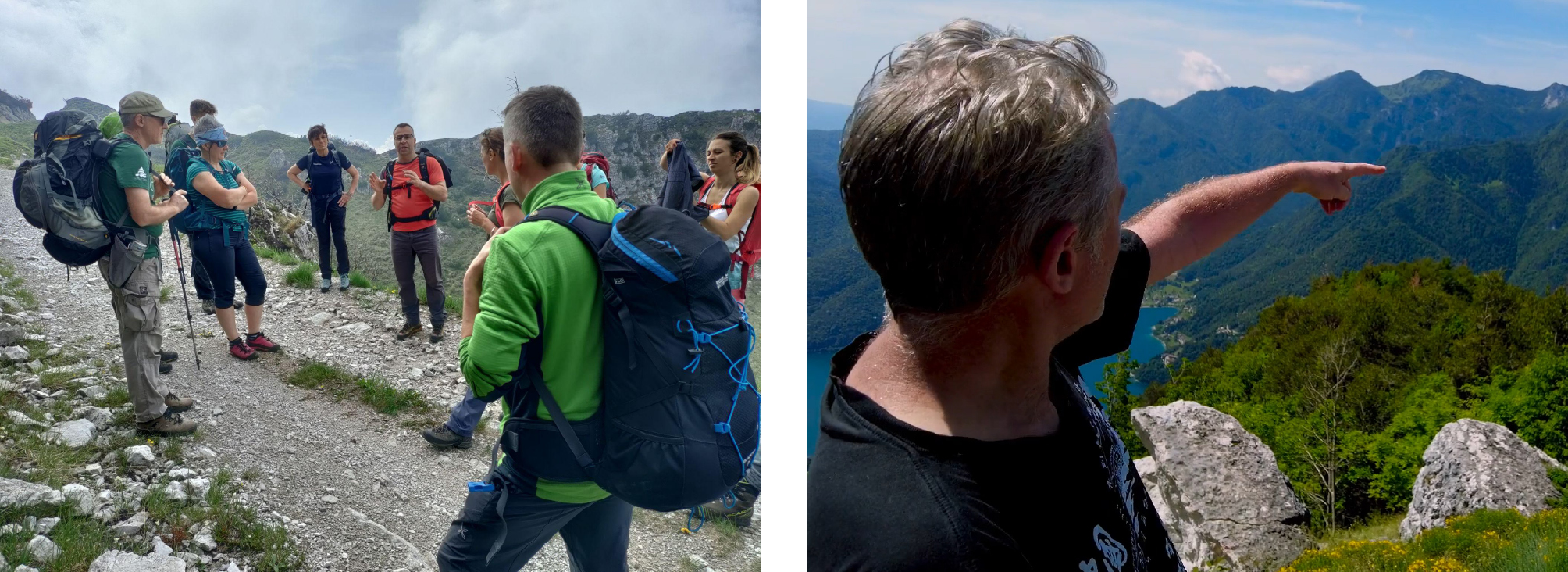
Our analysis of the Judicaria ecomuseum trekking initiative is therefore based on our direct involvement in the organisation process, our personal participation in the three weekends as well as 20 unstructured walking interviews3 (Anderson 2004; Jones et al. 2008) conducted with the participants and organisers during the three treks4. The issues guiding our interviews related to: the participants’ engagement in and opinions on the experience, the meaning of the concept of biosphere, the role of the Biosphere Reserve and of the Ecomuseum, the local heritage, the differences between insiders’ and outsiders’ perceptions and, finally, the specific keywords that guided the experience (gazes, limits, slowness).
We adopted a mobile method (Büscher, Urry, Witchger 2011; Cisani 2020) which “is not only a way to gain knowledge of landscape, but rather landscape (as an idea, a space and an experience) affects the walk and thus the methodology” (Macpherson 2016, 427). Moreover, the choice of the method of walking itineraries (and walking interviews) opened the possibility to build a relational approach to landscape which is dependent on the context, the shape of landscapes, subjects involved, embodied experiences, forms of walking and so on (Crouch 2010; Macpherson 2016). In our case we observed how walking had a direct influence on the participants, who shared a general recognition that the walks provided an alternative experience to traditional walking or trekking initiatives. Moving as a group, keeping a slow pace, being disposed to perceptions and receiving inputs on what the group could observe and perceive led to observations of unconventional bodily and sensuous engagement with the surrounding landscape and allowed the participants to “reappropriate time, take distance from one’s own problems, observe around and re-organise the interaction with the environment. The path has its own value beyond the destination, as the possibility to stop, respecting everyone’s pace, helps in perceiving what surrounds us” (Emanuela, visitor participant). For example, during conversations along the treks, the participants noticed that they could pay attention to smells and noises that they would not have otherwise noticed in other scenarios. Moreover, as observed by another participant, “slowness allowed us to stop and talk among us every time the landscape and environment changed” (Michele, mountain guide). This allowed people to live an immersive experience, during which the senses were activated, and the comprehension of the landscape deepened.
This understanding was enhanced by the presence of expert guides and guests; however, the participant roles were also influenced by the choice of walking and the approach adopted. Indeed, it opened the possibility of modulating one’s own role according to the situation, often blurring the borders between the invited speakers, organisers and guides, thus creating perceptions of openness, horizontality and informality. This does not devalue the significance of the informed interventions of those who were invited for their expertise. For example, as Claudia (visitor participant) told us,
It wasn’t since university excursions that I’ve had a chance to have an overview of a geographical area from so many points of view, on a professional level, but also to experience such a passionate participation from other walking companions. It was enriching, and it was nice to have a plurality of unknown voices and people with whom we had very loose boundaries and free dialogues during a shared journey.
The boundary between those holding expert knowledge and those learning something new was made even more permeable because of the mix of subjectivities, experiences, background and origins. The groups were composed of locals and some visitors from various areas in Italy. Some people were used to trekking; others were not.
The result was that everyone could learn from everybody else, as suggested by Emanuela (local inhabitant, SAT Oltre le Vette) when she underlined that “today, we are all sighted except Marco [visually impaired participant], but being here together allows us to learn and teach something reciprocally”. Therefore, walking together also meant that “we [were] listen[ing] to voices from different points of view and creating a net” (Alessandra, local inhabitant). This aspect was strongly underlined by many of the interviewees, including Federico Betta, a filmmaker working to create a documentary of the three weekends5, who stated that according to the philosopher Edgar Morin, “the ‘limit’ is a filter, a membrane between inside and outside, which doesn’t need to be overcome or pushed, but being permeable, it connects the two sides”. In this sense, Federico suggested that his heritage experience during the three trekking weekends was the richness of the perspectives he encountered – encounters that expanded his own limits and allowed him “to see, listen to, perceive and learn something new” about a landscape that was not completely new to him.
The choice of which trek to participate in, preceded by the book presentations on Friday evening, also influenced the themes discussed over the three weekends. It placed the participants in certain locations and within specific areas of the BR; we were in the villages of Storo, Bezzecca and Campo Lomaso for the book presentations and moved within the buffer and core areas of the BR during the treks. This helped us focus, guided by the three keywords, on the natural elements of the landscape and heritage, the relations between human and nature, who are the “users” of the mountain and what encounters are possible. We also focused on us as a group on the move within a specific landscape.
Therefore, walking was not simply a linear motion between two points within the BR; it was a method. In this sense, the entire project of the ecomuseum became, as Carmela and Diego defined it, “a metaphorical yarn”, a thread – intended as a practice and a process (Ingold 2016) – unwinding and activating multiple connections with and within the heritage of the Ledro Alps and Judicaria Biosphere Reserve. This entangled thread, lacking precise beginnings and ends, resonated, for example, in the horizontality and ambiguity of the participant roles.
In the following section, we employ the perspective of the recognition, appropriation and active conservation of heritage to analyse the thematic connections activated through the walking project. To do so, we analysed the interviews according to the following topics: reflections on the walking experience; the biosphere reserve’s role and meaning; the ecomuseum’s role; heritage; insider/outsider; gazes; limits; slowness; coexistence/relationship.
5. Walking as Connecting Heritage, Scales, Processes and Perspectives
Through our participant observation and walking interviews, we tried to disentangle and then re-weave the project/yarn into an interpretative framework marked by different types of emerging connections, not without contradictions or clashes. This section employs some of the participants’ voices to discuss four levels of connections instantiated in this walking process, which were variously reworked during the three experiences: connections among cultural and ecological values, local and global scales, formal and informal heritagisation processes and, lastly, between the insider and outsider perspective.
5.1. Bio-Cultural Heritage
Although the dichotomy between nature and culture has been variously discussed in the academic literature, for instance, in heritage studies (Harrison 2015) and ecology and conservation disciplines (Eriksson 2018), overcoming it has remained a difficult process in the public discourse, especially when it comes to landscapes of high ecological value and characterised by remarkable aesthetic values. This ongoing process is also evident in the reflections shared by the participants during the three trekking weekends. While some comments suggested that heritage in the BR was strictly related to natural and ecological values, many referred to “nature” as resulting from the interaction between human activities and the environment. For example, Chiara (expert from the Natural Science Museum of Trento, MUSE) underlined as follows:
Talking about the biosphere means to talk about coexistence and sharing spaces and, even more, talking about balance, which needs limits that so far have hardly been set […] In mountain contexts, though not only, nature is the result of a path of interaction between human activities and the natural environment, for example, pastures are ecosystems that give space to botanical or invertebrate species that could not live in the woods. (Chiara, expert from MUSE)
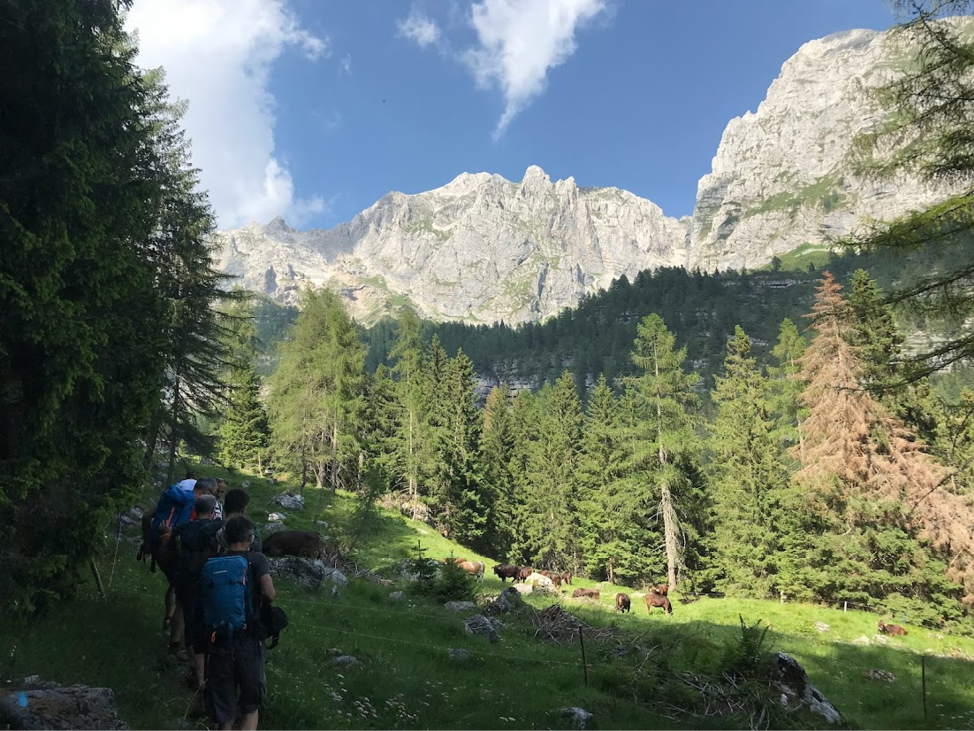
In this sense, the importance of human activities in transforming and preserving landscapes was recognised as well as the role of those who work to conserve the historical and natural heritage. Because of the active role of the ecomuseum in communicating through the trekking exercises, this message resonated in the reflection of one of the mountain guides when he summed up the key moments of the walk we were about to conclude by marking the interdisciplinary and interlinked perspective we were adopting: “The key point is that everything is connected” (Michele, mountain guide). A comment that further solidified these connections was also advanced by non-expert voices, such as Emanuela (visitor participant), who told us that “There is a constant flow of emotions from human to nature and vice versa” (Figure 4).
5.2. Transcalar Perspective
The second level of connections identified was the relation between the local and global scales (and all in-between), which came to the fore in multiple expressions. First, it emerged from the observation of the elements around us, for example, “in order to understand the existence of these endemic species, we must understand the spaces where they are located and where they moved over time, analysing their geologic history and going back to the last ice age” (Chiara, MUSE). Second, this connection was an intrinsic result of the work carried out by the ecomuseum itself in sustaining and taking part in the process of the recognition of the BR, as clarified by Diego: “the natural evolution of the ecomuseum was to expand to a wider and international scale, and we are now convinced that the choice of coexistence in the territory in contact with the community together with wider and higher stimuli made sense”. This choice also emerged from some of the guests’ profiles and work, such as Anna Sustersic, whose work on the international level6 began from the local and, more specifically, from the reserve nets in Trentino (Figure 5).
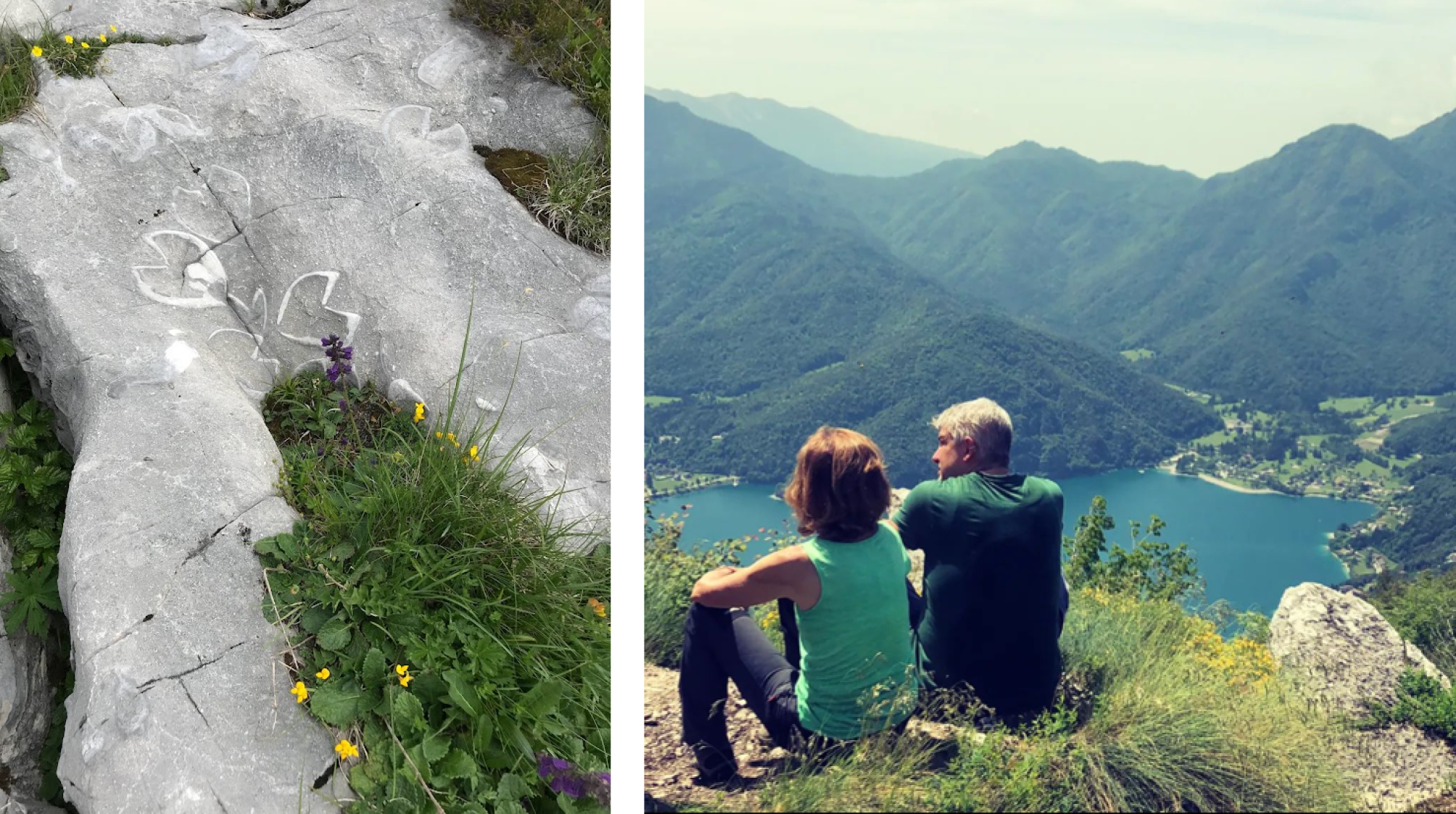
Various scales were also exposed in apparently clashing comments, as someone perceived that it was fundamental to propose initiatives such as the trekking weekends “also outside the local, and outside the BR area, as the challenge, once it obtained the BR recognition, is outside” (Paolo Pileri, guest author), while other participants mentioned that
maybe, the solution [in communicating heritage] is that of talking about it in the territory […], starting from the local – with schools or the alpine associations – because, as I said before, when you know places, then you also participate in their maintenance and keep correct behaviours (Claudia, visitor participant).
5.3. (In)Formal Processes
Within the formal process of heritagisation represented by the BRs, the ecomuseum activated a less formal process by organising the trekking weekends. These weekends intercepted the formal and institutional voices, meeting the councillor of culture in Storo, or incorporated guides working for the natural park as well as the expert interventions of the guests. However, during the weekends, we had the chance to observe and grasp the daily practices and narratives produced by some of the subjects encountered, such as the experience of Chiara, a young woman working with her family in the Malga Senaso di Sotto, who described their work to the participant group and their role in the preservation and co-production of the landscape of the pasture.
The interplay between the formal and informal was occasionally openly expressed during the interviews:
To us, the [biosphere] reserve was initially presented as an institution, but in the end, we realised that it is made up of people who work together, of territories, of organisations, and therefore, we too are part of the reserve; we bring messages, ideas … Participating helps you feel part of it, but before it was more of a symbol. To survive, the reserve needs people. (Fabiola, SAT Storo)
In other experiences, the understanding of the BR had a stronger link to formal processes and the conservational aim, such as for Mattia (volunteer), who admitted that
I am not familiar with the biosphere reserve, so from the point of view of a layman, what I understand is ‘UNESCO’. I believe that there is an intent to preserve. It’s like taking other big names or brands, known and recognisable. It puts the territory in a spotlight, in a better light.
5.4. Insider/Outsider
The last connection activated by the project concerned the insider/outsider dichotomy. As the other issues faced so far, these terms opened a broad and complex discussion. First, we observed opposition between the “unaware” and “unsustainable” tourist and the “aware” and more “sustainable” local inhabitant – or, alternatively, “aware” and sustainable tourists vis-à-vis unaware inhabitants. This opposition runs the risk of raising issues related to elitism or falling into the trap of the individualisation of responsibility (Sin 2017; Burrai, Hannam 2018). For example, as Marina (visitor participant) admitted that:
I feel a bit jealous. I would like the mountain to be reserved for people who love it as it is, who take it for what it gives, the effort of climbing without cableway, without cars. Also, when I went for a trek in the mountains the first few times, I thought it was only for enthusiasts, but today, it is more touristy, with the positive and negative aspects of it. Tourism is perhaps difficult to manage, and therefore, it makes it more challenging to protect the environment.
At the same time, Biancastella (local resident) suggested that “people don’t know their own territory anymore”, a position supported by Alessandra’s (local resident) reflection on how she “used to go around with my father who knew all these mountains. He explained everything to me. Now, it seems that it is more complicated to know and pass on this knowledge”.
Nonetheless, these roles are never fully fledged and must always be considered as partial (Cohen 1974), mixed and overlapped, as noted by Emanuela’s (visitor participant) when she realised that she could still sing the entire Trentino anthem by heart, which she had learned as a child going on annual holidays with her family. Similarly, the overlapping roles and importance of immersive and co-dwelling performances (Rabbiosi 2021) were evident in Claudia’s (visitor participant) reflection:
I don’t think that there is a need for specific training to feel this sense of belonging. Indeed, probably by frequenting places like this a sense of belonging is further developed and, therefore, also the desire for protection.
6. Conclusive Remarks and Research Perspectives
This paper sought to draft a reflection on the role of walking experiences in (re)producing heritage landscapes, eliciting values, activating connections and embodying practices of formal and informal exchange. Not only did the participants and research team walk in the landscape of the Ledro Alps and Judicaria Biosphere Reserve along hiking itineraries and ancient military roads and through small villages, woods and alpine pastures, they also made contributions to its reconfiguration, moving with the heritage landscape in its continuous state of change (Silverman et al. 2017).
This dynamic and relational perspective was fostered by the methodological and thematic choices decided with Carmela and Diego of the ecomuseum, namely by the adoption of walking as an attitude for the whole project and the role of the three proposed keywords. The preliminary results observed during the walks and emerging from the interviews showed the presence of multiple levels of connections, as discussed in the previous paragraph. Rather than simply stating which of the connections was complete, what is arguably important here is to underline the complex and unstraightforward processes behind the ongoing heritagisation of a UNESCO BR, the purview of this project. None of the four types of connections were completely and homogeneously in place. The nature-culture divide, albeit extensively discussed and challenged during the walks, is a binary that still inhabited the ways in which landscapes and heritage were conceived, used, produced and performed. The multiple scales colliding onto the itinerary, from the micro-perspective of the endangered flower specimen to the global scale of climate change, were observed during the process, illustrating challenges and opportunities, especially for the role of the local ecomuseum. Formal and informal processes were both implied to achieve more dialogue among the BR, the local governance institutions and the population, but the efficacy of this process in fostering awareness among the participants and the population in general could be explored further. Similarly, expert and layman’s perspectives were combined and connected to unhinge preconceptions and stereotypes.
One connection, though it appeared to be missing or unexplored, was the tie linking the historic evolution of the landscape with its near and long-term future. Past dynamics, either geological or sociocultural, were often mentioned and inhabited in their tangible and intangible facets during the itineraries, connecting them with some present trends. Nevertheless, what is the role of the subjects involved, the ecomuseum and the UNESCO Man and the Biosphere program in shaping the future of this heritage landscape, and in which directions? These issues were not addressed during the three weekends or in the interviews and could inform our future activities in collaboration with the ecomuseum.
Another widely emphasised aspect is the need to keep alive a collective, community-based and participatory approach through which to devise planning strategies that act on a dual level: on the one hand, the recovery of the linear element and its heritage; on the other, the possibility of triggering processes of regeneration, enhancement and promotion of the surrounding area with new social, receptive and commercial activities. What emerges in the scientific arguments proposed is the important role of the network and the territorial system: each of these experiences cannot disregard its link with the communities, with the territorial actors, with the territory and its resources (Burini 2018). Unfortunately, a univocal and common strategic vision, through which to coordinate an integrated valorisation of structures and infrastructures and build a network of institutional and non-institutional actors, is often lacking. Nevertheless, the project “In cammino nella biosfera” was not a one-off event but was then structured as a format that has now reached its third year of implementation, involving new actors from the area and beyond, crossing other landscapes of the Biosphere Reserve with the aim of reinterpreting and mobilising their heritage.7
Further research could improve our understanding of these connections and, from a public geography perspective, foster a comprehensive take on slow mobilities (especially walking itineraries) in their multifaceted roles, not only as slow tourism strategies for regeneration of marginal areas, but also including awareness raising and educational activities.
Acknowledgements
This paper and the research behind it would not have been possible without the invaluable contribution of Carmela Bresciani and Diego Salizzoni, from the Judicaria Ecomuseum and without the openness of the participants of the treks in sharing their opinions and feelings during the walking interviews.
References
Anderson, J. (2004). Talking whilst Walking: A Geographical Archaeology of Knowledge. Area, 36(3), 254-261. https://www.jstor.org/stable/20004390
Baiocchetti, G., Zanolin, G. (2022). Il turismo dei cammini come opportunità per lo sviluppo locale nell’Italia minore: il caso di San Benedetto. In Spagnoli, L. (ed.). Itinerari per la rigenerazione territoriale tra sviluppi reticolari e sostenibili. Milano, FrancoAngeli, 193-201.
Biasori, L., Mazzini, F., Rabbiosi C. (2023). Reimagining Mobilities across the Humanities. Abingdon, Routledge.
Borrelli, N., Davis, P. (2012). How Culture Shapes Nature: Reflections on Ecomuseum Practices. Nature and Culture. Nature and culture, 7(1), 31-47. DOI: https://doi.org/10.3167/nc.2012.070103
Burrai, E., Hannam, K. (2018). Challenging the Responsibility of “Responsible Volunteer Tourism”. Journal of Policy Research in Tourism, Leisure and Events, 10(1), 90-95. DOI: https://doi.org/10.1080/19407963.2017.1362809
Burini, F. (2018). Valorizzare il paesaggio e i saperi locali dei territori rurali in chiave smart: le potenzialità dei sistemi di mapping e di storytelling per una promozione turistica sostenibile. Annali del turismo, 7, 141-159.
Büscher, M., Urry, J., Witchger, K. (Eds.). (2011). Mobile Methods. London, Routledge.
Castiglioni, B., Cisani, M. (2022). The Complexity of Landscape Ideas and the Issues of Landscape Democracy in School and non Formal Education: Exploring Pedagogical Practices in Italy. Landscape Research, 47(2), 142-154. https://doi.org/10.1080/01426397.2020.1741528
Castree, N. (2014). The Anthropocene and Geography I: The Back Story. Geography Compass, 8(7), 436-449. DOI: https://doi.org/10.1111/gec3.12141
Cerutti, S. Menzardi, P. (2022). Percorsi di riscoperta e turismo lungo le Alpi: i passi partecipati e sostenibili del “Trekking delle Terre di Mezzo”. In Spagnoli, L. (Ed.). Itinerari per la rigenerazione territoriale tra sviluppi reticolari e sostenibili. Milano, FrancoAngeli, 59-66.
Cisani, M. (2020). Paesaggi e mobilità: Strumenti per le geografie del quotidiano. Milano, FrancoAngeli.
Cohen, E. (1974). Who Is a Tourist? A Conceptual Clarification. The Sociological Review, 22(4), 527-555. DOI: https://doi.org/10.1111/j.1467-954X.1974.tb00507.x
Council of Europe (2000). Council of Europe Landscape Convention, Council of Europe Treaty Series. No. 176.
Council of Europe (2005). Council of Europe Framework Convention on the Value of Cultural Heritage for Society, Council of Europe Treaty Series. No. 199.
Crouch, D. (2010). Flirting with Space: Thinking Landscape Relationally.. Cultural Geographies, 17(1), 5-18. DOI: https://doi.org/10.1177/1474474009349996
De Felice, P., Mundula, L., Spagnoli, L. (2023). Pratiche di mobilità sostenibile. Itinerari per la rifunzionalizzazione di spazi in dis-uso e territori «lenti». Introduzione. In Rocca, L., Castiglioni B., Lo Presti L. (Eds.). Atti del XXXIII Congresso Geografico Italiano: Soggetti, gruppi, persone pratiche, spazi e dinamiche delle mobilità umane. Padova, Cleup edizioni, 73-78.
Dell’Agnese, E. (2016). L’ecomuseo come strumento per la rivalorizzazione del territorio. In Pecoraro Scanio, A. (Ed.). Turismo sostenibile. Retorica e pratiche. Roma, Aracne, 245-264.
Eriksson, O. (2018). What Is Biological Cultural Heritage and Why Should We Care About It? An Example from Swedish Rural Landscapes and Forest. Nature Conservation, 28, 1-32. DOI: https://doi.org/10.3897/natureconservation.28.25067
Gravari-Barbas, M. (2021). Tenements in New York and Riads in Marrakesh: Mobilities and the Paradigm of Heritagization. In Cattan, N., Faret, L., (Eds.) Hybrid mobilities. Transgressive Spatialities. Abingdon, Routledge, 15-36.
Harrison, R. (2015). Beyond “Natural” and “Cultural” Heritage: Toward an Ontological Politics of Heritage in the Age of Anthropocene. Heritage & Society. Heritage & society, 8(1), 24-42. DOI: https://doi.org/10.1179/2159032X15Z.00000000036
Harvey, D., Perry, J. (Eds.). (2015). The Future of Heritage as Climate Change. Abingdon, Routledge.
Ingold, T. (2016). Lines. A Brief History. Abingdon, Routledge. DOI: https://doi.org/10.4324/9781315625324
Jansen-Veerbeke, M., Dewailly, J.M. (1999). Guest Editorial: Geography and Tourismification. Tourism Geographies, 1(1), 3-6, DOI: https://doi.org/10.1080/14616689908721290
Johung, J., Sen, A. (2013). Landscapes of Mobility Culture, Politics, and Placemaking. Abingdon, Routledge.
Jones, P., Bunce, G., Evans, J., Gibbs, H., Hein, J. R. (2008). Exploring Space and Place with Walking Interviews. Journal of Research Practice. Journal of Research Practice, 4(2), 1-9.
Hein, J. R., Evans, J., Jones, P. (2008). Mobile Methodologies: Theory, Tecnology and Practice. Geography Compass. Geography compass, 2(5), 1266-1285. DOI: https://doi.org/10.1111/j.1749-8198.2008.00139.x
Kirsch, S. (2015). Cultural Geography III: Objects of Culture and Humanity, or, re “Thinging” the Antropocene Landscape. Progress in Human Geography, 39(6), 818-826. DOI: https://doi.org/10.1177/0309132514566741
Macpherson, H. (2016). Walking Methods in Landscape Research: Moving Bodies, Space of Disclosure and Rapport. Landscape Research, 41(4), 425-432. DOI: https://doi.org/10.1080/01426397.2016.1156065
Mariotti, A., Berti, E., Denu, P. (2015). Gestion des itinéraires culturels. De la théorie à la pratique. Strasbourg, Council of Europe Publishing.
Meinig, D.W. (1979). The Interpretation of Ordinary Landscapes: Geographical Essays. Oxford, Oxford University Press.
Menatti, L., Casado da Rocha, A. (2016). Landscapes and Health: Connecting Psychology, Aesthetics, and Philosophy through the Concept of Affordance. Frontiers in Psychology, Theoretical and Philosophical Psychology, 7(571). DOI: https://doi.org/10.3389/fpsyg.2016.00571
Murphy, J. (2011). Walking a Public Geography through Ireland and Scotland. The Geographical Journal, 177(4), 367-379. DOI: https://doi.org/10.1111/j.1475-4959.2011.00406.x
Ojeda, A.B., Kieffer, M. (2020). Touristification. Empty Concept or Element of Analysis in Tourism Geography? Geoforum, 115, 143-145. DOI: https://doi.org/10.1016/j.geoforum.2020.06.021
Pearce, L., Merriman, P. (2018). Mobilities and the Humanities. Abingdon, Routledge.
Pettenati, G. (2022). Landscape as Heritage. International Critical Perspectives. London, Routledge.
Rabbiosi, C. (2021a). Performing a Walking Holiday: Routing, Immersing and Co Dwelling. Tourist Studies, 21(3), 367-386. DOI: https://doi.org/10.1177/1468797621998177
Rabbiosi C. (2021b), “Vacanze in cammino, Performance dei luoghi: Una proposta concettuale”, in Iacoli, G., Papotti, D., Peterle, G., Quaquarelli, L. (eds.). Culture della mobilità, immaginazioni, rotture, riappropriazioni del movimento. Firenze, Franco Cesati, 249-262.
Santo, R.D., Baldi, N., Duca, A.D., Rossi, A. (2017). The Strategic Manifesto of Italian Ecomuseums. Museum, 69, 86-95. DOI: https://doi.org/10.1111/muse.12153
Sheller, M. (2018). Mobility Justice. The Politics of Movement in an Age of Extremes. New York, Verso Books.
Silverman, H., Waterton, E., Watson, S. (2017). Heritage in Action. Cham, Springer. DOI: https://doi.org/10.1007/978-3-319-42870-3_4
Sin, H.L. (2017). Selling Ethics: Discouses of Responsibility. Tourism, Annals of the American Association of Geographers, 107(1), 218-234. DOI: https://doi.org/10.1080/24694452.2016.1218266
Spagnoli, L. (Ed., 2022). Itinerari per la rigenerazione territoriale tra sviluppi reticolari e sostenibili. Milano, FrancoAngeli.
Urry, J., Sheller, M. (2006), The New Mobilities Paradigm. Environment and Planning, 38(2), 207-226. DOI: https://doi.org/10.1068/a37268
Waterman, T., Wolff, J., Wall, E. (Eds., 2021). Landscape Citizenship. Abingdon, Routledge.
Watson, S., Waterton, E. (2017). Reconnections. In Silverman, H., Waterton, E., Watson, S. (Eds). Heritage in Action. Cham, Springer. DOI: https://doi.org/10.1007/978-3-319-42870-3_4
Wylie, J. (2007). Landscape. London, Routledge.
1 This area, although considered marginal compared to other surrounding areas that are more developed economically and especially in terms of tourism, has an economy based on a significant agriculture and livestock sector, tending towards industrialisation and monoculture, a localised but stable industrial sector and a growing tertiary and tourism sector. Depopulation is taking place, but in a limited way, and there are problems of mobility and accessibility. However, according to the Province of Trento, ‘the area has a significant number of enterprises compared to the average of the country’s peripheral areas, and higher specialisation indices in the energy, gas and water sectors, in construction and in services’. (Report for the Selection of Inner Areas, Autonomous Province of Trento, p. 6 https://politichecoesione.governo.it/media/3103/rapporto-istruttoria_pa-trento.pdf ).
3 Of the 20 interviewees 12 were women and 8 men; 4 of them were tourists, 9 were local laypeople, and 7 were experts. Besides one person who was younger than 30 years old, the rest of the interviewees were aged between 30 and 65 years old.
4 Benedetta Castiglioni and Margherita Cisani participated in the first survey and meeting with the ecomuseum, Margherita Cisani participated in the first trek, Mauro Varotto (geographer, University of Padova) participated in the second weekend and Giovanna Di Matteo in the third.
5 The video reportage made by Federico Betta is available here: https://vimeo.com/manage/videos/745444501/ec3c5c0e18
6 For example, see the Life Coexistence project: https://www.coexistence.life/