https://doi.org/10.36253/bsgi-7599
Revitalising Rural Communities. Addressing Ageing and Depopulation in Rural Italy. Learning from the Happy Village, Fluminimaggiore
Riattivare le comunità rurali. Affrontare l’invecchiamento e lo spopolamento nell’Italia rurale. Imparare dall’Happy Village di Fluminimaggiore
Dipartimento di Scienze Economico-Sociali e Matematico-Statistiche, Università degli Studi di Torino, Italia
E-mail: nicolofenu@gmail.com; paolo.giaccaria@unito.it
Abstract. The world population prospect highlights the unprecedented ageing of the world’s population (UNDESA 2023). Current research on rural and remote communities shows unique social and environmental challenges that can impact healthy ageing differently from those facing urban populations (Keating et al. 2011). The paper analyses the case study of the municipality of Fluminimaggiore, Sardinia (Italy). In 2018, the project “Happy Village. Pensionati con la Valigia” (Happy Village for Seniors with Suitcases) was launched in the municipality. The project is based on the realisation of elderly-friendly decentralised housing. This new retirement home concept exploits hundreds of abandoned and severely ruined dwellings within the urban center. The proposed residence is targeted at elderly individuals over 65 from northern Italy and northern Europe who seek places with a predominantly mild climate, a high quality of life, and a lower cost of living.
Keywords: active ageing, silver economy, depopulation, Happy Village, rural Sardinia.
Riassunto. La prospettiva demografica mondiale evidenzia un invecchiamento senza precedenti della popolazione mondiale (UNDESA 2023). Le attuali ricerche sulle comunità rurali e remote mostrano sfide sociali e ambientali uniche che possono avere un impatto sull’invecchiamento diversamente da quello delle popolazioni urbane (Keating et al. 2011). Il documento analizza il caso di studio del comune di Fluminimaggiore, Sardegna (Italia). Nel comune, nel 2018, è stato avviato il progetto “Happy Village. Pensionati con la Valigia” (Happy Village for Seniors with Suitcases). Il progetto si basa sulla realizzazione di una residenza diffusa a misura di anziano. Questo nuovo concetto di casa di riposo sfrutta le centinaia di abitazioni abbandonate e gravemente rovinate all’interno del centro urbano. La residenza proposta si rivolge ad anziani over 65 provenienti dal nord Italia e dal nord Europa alla ricerca di luoghi con un clima prevalentemente mite, una buona qualità di vita e un guadagno sul costo della vita.
Parole chiave: invecchiamento attivo, silver economy, spopolamento, Happy Village, Sardegna rurale.
Contents
2.3 Ageing in place. Ageing in rural communities
3.1 Architectural and urban Regeneration
4. The case of Happy Village of Fluminimaggiore, Italy
4.2 Research context: Fluminimaggiore
4.3 The project “Happy Village”
4.4.1 Architectural and urban Regeneration
4.4.3 Silver economy e community services
1. Introduction
Rural regions in the EU face challenges like depopulation, economic disparities, and ageing populations, which weaken the labour market. However, they also hold great potential for sustainable development by leveraging natural resources, cultural heritage, and innovation to drive economic and social growth (European Commission 2024).
The World Population Prospects emphasises the unprecedented ageing of the global population (UNDESA 2023; Vasileios 2019). The ageing or ”greying” of the population is defined as a process characterised by an increasing share of older individuals (65 and over) within the population, leading to a permanent change in its age structure (UNDESA 2025). The ageing population results from declining fertility rates and increased life expectancy, making it a central issue on the European political agenda. The rapid ageing of the population will be a significant factor in the coming decades (EU 2024b). In 2023, the EU population was estimated at 448.8 million, with over one-fifth (21.3%) aged 65 years or older. Over the 20 years from 2003 to 2023, the total EU population increased from 431.2 million to 448.8 million, representing a growth of 4%. Within this period, 18 EU countries experienced population growth, while 9 countries saw a decline. From 2003-2023, the share of individuals aged 80 and over increased in all EU countries, with the EU average rising by 2.3 %, from 3.7% to 6.0%, projected to reach 11.4% by 2050. The highest increases were observed in Greece (+3.3 %, from 3.8% to 7.1%) and Latvia (+3.3 %, from 2.7% to 6.0%), while the lowest was in Sweden (+0.2 %, from 5.3% to 5.5%). Similarly, the share of individuals aged 65 and over increased in all EU countries, with the EU average rising by 5.1 %, from 16.2% to 21.3% (EU, 2024a).
The concept of ageing has evolved significantly over the years due to demographic shifts, making the ageing population a prominent topic of discussion in recent decades (Niemczyk et al. 2023). Ageing populations significantly influence social and economic life, prompting concerns about resource allocation, living standards, and intergenerational relations. The twenty-first century requires societies to address these demographic changes and their long-term implications. Current discussions often focus on costs and burdens, sometimes discriminately, and doubts about the value of ageing persist, becoming more pronounced over time (Phillipson 2013).
The WHO recognises population ageing as both a challenge and an opportunity; addressing ageing will impact various sectors of society, including employment, financial markets, goods and services (especially housing and mobility), welfare and healthcare systems, and family organisations (WHO 2015; 2024).
The literature review on the ageing population reveals two contrasting perspectives (Pauhofova, Dovalova 2015). The first perspective emphasises the negative implications for public finances (Sharpe 2011). An ageing population and slower labour force growth impact economies in several significant ways: the growth of Gross Domestic Product (GDP) tends to decelerate, the financial burden on the working-age population increases as they are required to contribute more to support the elderly; finally public budgets face considerable strain due to the rising costs associated with health care and retirement programs for the elderly. These combined factors pose a challenge to the sustainability of economic growth and necessitate careful fiscal planning and policy adjustments (Morrow, Roeger 1999).
The second perspective adopts a positive outlook on the ageing population, highlighting the social and economic opportunities and challenges it presents (Prettner 2021; Prettner 2013). From this perspective, in recent years, international institutions and European programmes like ESPON have addressed complex spatial challenges such as shrinking areas, inner peripheries, and left-behind places (ESPON 2017). ESPON emphasises integrated approaches to counter depopulation and to foster territorial cohesion. Its Policy Brief, The Ageing Revolution: Towards a European Silver Deal?, proposes turning demographic ageing into an opportunity through age-friendly territories that enhance older people’s social inclusion and well-being. This involves strategies like assistive health technologies, intelligent transport to reduce isolation, and age-friendly infrastructures (ESPON 2021).
The European Rural Network’s Smart Villages strategies complement these efforts, promoting innovative solutions for demographic ageing, improved service access, and sustainable technologies (ENRD, 2018). These models align with the Next Generation EU (NGEU) principles and European Structural Funds, such as the European Regional Development Fund (ERDF) and European Social Fund (ESF).
During the 2021–2027 programming period, these initiatives aim to address five strategic objectives: (I) fostering innovation and local business growth; (II) promoting renewable energy and climate action; (III) enhancing mobility and digital access; (IV) ensuring social inclusion and equitable services; (V) supporting local development based on territorial specificities. Integrating NGEU with cohesion funds is critical for addressing disparities and tailoring policies to the needs of rural and inner areas, thus promoting resilient and balanced territorial development.
In Italy, the National Strategy for Inner Areas (NSIA) is a key instrument for addressing depopulation, marginalisation, and socio-economic decline in inner areas by promoting balanced and inclusive territorial development. Launched in 2013 and strengthened through European programming cycles and the National Recovery and Resilience Plan (NRP), NSIA focuses on integrated interventions aimed at improving accessibility to essential services, health, education and mobility, and enhancing territorial resources as drivers of local development.
In this context, population ageing emerges as one of the central challenges for inner areas, where the old-age index is particularly high compared to the national average. The phenomenon is amplified by the flight of younger generations, poor infrastructure and reduced accessibility to social and health services (Barca et al. 2014). ESPON highlights the importance of soft factors in complementing structural policies through more comprehensive policy approaches. This implies interventions to strengthen all forms of exogenous interaction, enhancing and consolidating networks that provide greater capacity for economic development and socio-community welfare (2017). In this soft policy context, the research examines the dynamics of depopulation and ageing in inner and rural areas, specifically focusing on the Happy Village project. Launched in 2018 by the Municipality of Fluminimaggiore, the project aims to address pressing challenges such as depopulation, demographic ageing, and the underuse of architectural and cultural heritage. Despite its partial implementation and structural challenges, the project represents an experimental model of significant interest. The project raises several central research questions: What models can revitalise architectural heritage by engaging the silver segment of the population as active contributors? How can local administrations and communities foster initiatives to revitalise inner areas? This study suggests that the Happy Village project offers valuable insights into territorial regeneration, leveraging the silver economy and innovative approaches to redevelop architectural heritage. It highlights practices and actions promoted by local administrations and communities of practice. The project strategy is structured around four key actions: architectural and urban regeneration, attraction of new inhabitants, development of the silver economy, and the establishment of community cooperatives.
The article unfolds in four sections. The first section delves into the literature on the ageing society and introduces the concept of a friendly ageing environment, essential for fostering active and integrated ageing. The second section outlines intervention strategies, practices and policies related to the project, providing a detailed analysis of its implementation. The third section reconstructs the project’s historical evolution and examines its dynamics, highlighting opportunities and limitations. Finally, the conclusion reflects the project’s prospects, offering concrete implications for research and policy development aimed at revitalising inner areas.
2. Theoretical Background
Demographic ageing presents significant challenges and opportunities for societies and economies worldwide. As populations age, there is an urgent need to develop innovative policies and strategies to ensure social inclusion, economic participation, and improved quality of life for older individuals. This section provides a theoretical foundation for addressing these issues, emphasising the importance of social inclusion, focusing on three interrelated concepts: the silver economy, age-friendly environments, and ageing in place, particularly in rural and inner areas.
2.1 Silver economy
The silver economy can be defined “as the economic opportunities arising from the public and consumer expenditure related to population ageing and the specific needs of the population over 50. The ageing population can be divided into 3 groups, each with their need-patterns: active, fragile and dependent. Thus, the silver economy comprises a large part of the general consumer economy, but with considerable differences in spending priorities and patterns” (European Commission 2015). The Silver Economy is becoming increasingly significant and profitable across multiple public and private sectors. These sectors include healthcare, finance, employment, leisure and well-being, education, and digital tools (Niemczyk et al. 2023). The “graying market” or “silver market,” defined broadly as individuals aged 50 and older, is experiencing significant emergence and continuous growth (Kohlbacher, Herstatt 2011). The characteristics of seniors in the 21st century differ markedly from those of seniors in the latter half of the 20th century, and even more so from earlier historical periods; that, the new generation of older individuals (aged 50 and over) in Western European countries, will be healthier, better educated, and more financially independent. As a growing demographic benefiting from human activities, they generate demand for various products and experiences. The system of goods and services designed to capitalise on their purchasing power and meet their diverse needs, encompassing living, health, tourism, cultural, information, and communication requirements, is termed the silver economy.
The silver economy has potential economic, social, medical, familial, personal, and technological growth. It explores the market behaviours of seniors and posits that the silver economy will increasingly gain significance and profitability each year across both public and private sectors. This encompasses areas such as health, finance, employment, leisure, well-being, education, and the utilisation of digital tools (Niemczyk et al. 2023).
The silver economy encompasses many distinct yet interconnected elements that collectively aim to enhance the ageing population’s quality of life, societal inclusion, and economic participation. This is achieved by developing innovative policies, products, and services tailored to meet their needs, fostering economic growth and job creation. By adopting a holistic view of ageing, the silver economy highlights its potential and impacts the development of diverse policy domains. These policies include those related to the built environment, employment for individuals over 50, lifelong learning, and preventive healthcare.
Furthermore, the silver economy seeks to integrate new technologies, such as health monitoring systems, smart homes, driverless vehicles, and care robots, to reduce the costs associated with ageing and enhance the lives of older citizens. This integration not only aims to improve the well-being of the elderly but also contributes to economic stimulation (Eatock 2015).
2.2 Age-friendly environment
According to WHO, an age-friendly environment “fosters health and well-being and the participation of people as they age. They are accessible, equitable, inclusive, safe, secure, and supportive. They promote health and prevent or delay the onset of disease and functional decline” (WHO, 2015).
Age-friendly cities are a multidimensional concept, as shown in Figure 1, and development has become a central focus in the fields of ageing and urban planning (van Hoof et al. 2021). An age-friendly environment allows individuals to age gracefully in a supportive setting, continue their personal growth, remain included, and actively contribute to their communities while preserving their independence and health.

The policies to create an age-friendly environment are among the most critical public health actions regarding population ageing; they must shape trajectories that cover a wide range of sectors: health, long-term care, transport, housing, labour, social protection, information, and communication. The policies also engage various stakeholders: government, service providers, civil society, older people and their organisations, families, and friends. Implementing these policies requires action at multiple levels of government. The literature confirms that making social and physical environments age-friendly benefits older adults. The environment where the elderly live could be either a resource or a barrier, enabling people to live more independently or allowing them to engage in what is important to them. The themes related to ‘age-friendly’ communities have taken an important place in social and urban policy, including issues related to the urban and rural environments (Buffel et al. 2012).
Housing plays a central role, as their growing demand calls for new forms of living that move beyond the binary of remaining in one’s private dwelling or relocating to specialised housing or residential care. Emerging models emphasise more diverse housing solutions that integrate mixed-use spaces, services, and communal facilities (Robinson et al. 2020). Increasingly, local governments, cities, and communities globally are promoting policies and actions to improve age-friendly environments (WHO 2018). The policies to create an age-friendly environment are one of the most critical public health actions to population ageing. They have to shape trajectories that cover a wide range of sectors: health, long-term care, transport, housing, labour, social protection, information, and communication. The policies also engage various stakeholders: government, service providers, civil society, older people and their organizations, families, and friends. It also requires action at multiple levels of government (WHO, 2015). The literature confirms that making social and physical environments age-friendly will benefit older adults (Lehning et al. 2014). The environment where the elderly live could be either a resource or a barrier, enabling people to live more independently or giving them the capacity to experience what is important to them. Housing plays a central role, with increasing demand driving the need for alternative living models that transcend the binary of remaining at home or moving into specialised accommodation or care facilities. Themes related to ‘age-friendly’ communities have taken an important place in social and urban policy, including issues related to the urban and rural environments (Buffel et al. 2012).
2.3 Ageing in place. Ageing in rural communities
Ageing in place is defined “as remaining in a community-based dwelling during one’s late years in life. The home may be one where an individual spends most of their adulthood, perhaps rearing a family and establishing deep roots, or it may be a ‘downsized’ space, such as an apartment, mobile home, or condo, that offers the appeal of independent living without the maintenance, expense, and potential dangers of remaining in a larger home. For some, ageing in place may even mean moving in with a family member or friend to maintain independence while enjoying co-housing’s benefits – and support” (Ratnayake et al. 2022). “Ageing in place” refers to the ability to live safely, independently, and comfortably in one’s own home and community, regardless of age, income, or ability level1. Age in place demands a high level of community support and services. A transformation is underway, shifting from a service delivery model centered on performance to one that is prevention-oriented and rooted in community-based approaches. Policies are moving in different spheres: from built environments through affordable housing, secure and livable public spaces, diverse transportation opportunities, and accessible health and wellness services. On the other hand, local communities encourage and promote occasions for intergenerational social participation and community leadership (Jeste et al. 2016). Literature manifests a lack of reflection about ageing in rural communities: all studies mainly focus on urban ageing. Keating et al. (2013) also argues that the definition of age-friendly should be reconceptualized to explicitly accommodate different community needs and resources, to be more inclusive, interactive, and dynamic, incorporating changes that have occurred over time in people and places. Geographical and urban research in rural ageing communities has had limited interest (Skinner et al. 2015). Most discussions have predominantly focused on the urban environment, with limited attention given to age-friendly settings for older adults residing in rural or inner areas (Weil 2017; Lui et al. 2009; Canada 2006). Ageing in rural areas is a heterogeneous process (Weil 2017). Communities have different forms and trajectories than urban experiences (Skinner et al. 2015). Ageing in rural areas entails isolation, lack of services and service access, and economic depression (Shucksmith 2003). International reflection is needed concerning construction, service management, and social welfare services to respond to age-friendly environments in contexts other than urban ones.
Carlucci and Lucarelli (2013) describe the phenomena of marginalization in the Italian inner areas experienced since the 1950s through intense phenomenon of de-anthropization: population ageing, employment reduction, and use of territorial capital. A progressive quantitative and qualitative reduction of the local offer of public, private, and collective services - services that define the quality of citizenship. As highlighted by the research conducted in 10 rural communities in the Republic of Ireland and Northern Ireland, rural social exclusion in old age is characterised by: social connections and social resources; services; transport and mobility; safety, security, and crime; income and financial resources (WHO 2017).
The silver economy, the age-friendly environment and the concept of ageing in place represent fundamental theoretical foundations for the development of innovative policies and strategies to address the challenges of demographic ageing. These concepts underline how the economic and social opportunities generated by the elderly population can be translated into practical interventions ranging from urban regeneration to the creation of new inclusive housing models. Among these, senior housing emerges as a central solution. In Italy, although it is a phenomenon in its beginnings, experiments are being observed that combine intergenerational co-housing and cohousing, encouraging active ageing and the creation of social support networks.
These theoretical reflections find practical application in urban and rural heritage regeneration policies, in enhancing the local economy and in promoting cooperative communities. The following section explores how these strategies can be implemented, with innovative initiatives that integrate the principles of the silver economy and sustainability to improve the quality of life, foster territorial development and create inclusive and resilient environments in line with the needs of the elderly population and local communities.
3. Policy and strategy
In terms of policy frameworks, four main approaches can be identified as emerging from both academic literature and practical implementation:
3.1 Architectural and urban Regeneration
Regeneration initiatives can include land reuse, reconstruction of residential buildings, redevelopment of commercial areas, and environmental rehabilitation. The purpose is to create new economic opportunities and improve the quality of life for residents through a broader approach to redevelopment that includes social and cultural redevelopment. Specifically, in Fluminimaggiore, the focus is on a social housing model. Cohousing is a type of housing that integrates private residences with extensive shared facilities and communal activities designed for daily living (Larsen 2019). Descriptions and definitions of cohousing can be categorised into four main aspects: spatial, procedural, management, and functional. Chiodelli (2010) outlines these aspects and seeks to create categories for understanding cohousing. Key characteristics include social contact design, where physical spaces encourage a strong sense of community, and large collective structures that serve as integral parts of the community, complementing private living spaces. Resident participation is crucial, involving community recruitment, production, and management processes and promoting a collaborative lifestyle that fosters interdependence, support networks, sociality, and security. Social aspects of cohousing projects include common spaces for socialisation, facilities with shared services, and the involvement of residents in designing and utilising living areas and community management. Cohousing also emphasises the cohabitation of diverse social groups, including those at risk of exclusion, creating a heterogeneous community, and focuses on low-income housing, providing access to services and exploring new ways of living for individuals with limited income (Chiodelli 2010). Senior cohousing is an alternative way of living for older people in the 21st century (Labus 2016). In terms of an age-friendly environment, cohousing for seniors is a different approach to creating a friendly environment. Cohousing builds a new relationship between co-housers and the environment in which they live, both socially and physically. Cohousing impacts both urban and rural scales: neighbourhoods or small villages. The introduction of cohousing can lead to the opening of new services, activities, and new residents. The transformation that a cohousing brings is not only on a social level but also affects the physical space in which it is settled. This transformation, whether in urban contexts, historical centres, suburbs, or small rural communities, could bring a social mixite and diversify the use of public spaces (Leder et al. 2010). They carry the risk of creating enclaved communities (Musolino 2015). Denmark has about 250 senior co-housing communities (Pedersen 2015). Rizzini’s analysis of the Italian context highlights the limited diffusion of cohousing, with relatively few individuals having direct experience of this form of collective living, so frequently, could be cultural obstacles such as family models, habits of living alone, and a reluctance to change houses or neighbourhoods (2016). Retrofit cohousing is a form of cohousing that reuses existing housing stock, where ‘Retrofit’ can concern the functional distribution adjustment of the apartments, the energy refurbishment, domotics improving comfort, and implementing uniform quality assurance of both design and construction. Common spaces and facilities have different forms of ownership and management (Sanguinetti 2015). Examples of redevelopment in the Italian territory are the one-euro houses (Fenu 2020; Delon, Graziano 2023) and the ‘albergo diffuso’ (Paniccia 2012), which represent two innovative approaches to the rehabilitation of abandoned properties, especially in small Italian villages.
3.2 New inhabitants
The literature extensively researches novel living arrangements in mountainous and rural areas. Additionally, various practical initiatives aim to explore and implement new forms of re-inhabitation in these contexts. According to Wilbur (2013), neo-rural, represented by back-to-the-landers, collectively inscribes certain values on the countryside, such as environmental sustainability, cooperative labour, or voluntary simplicity. These values contrast with the consumptive, acquisitive, and myopic attitudes that characterise rural development and industrial agriculture. Back-to-the-land can be considered “a process of seeding alternatives. Through the literal act of seeding, back-to-the-landers aim to create something both new and different. Back-to-the-landers can act as test cases for strategies that weld these values to everyday practice, with scaled-up and collectivised variants” (Wilbur 2013).
Neo-rural finds a match in Italy with ‘nuovi montanari’ (new mountaineers), who do not aspire to a nostalgic ‘life in the woods’ that rejects modernity but aims for innovative existential and entrepreneurial development. This alternative model enhances local resources and promotes a green economy, eco-sustainability, environmental balance, and creativity. From the agricultural sector to tourism and culture, the initiatives of neo-mountaineers and ‘returnees’ serve as laboratories of innovation that respect territorial specificities without bending to the logic of profit (Dematteis 2017).
The heterogeneity and complexity of the ‘new mountaineers’ make unambiguous classification difficult. This group includes a variety of life trajectories, economic projects, and representations of the mountains. They include neo-rural youth seeking jobs and lifestyles in harmony with the environment, digital nomads who choose pleasant settings to carry out their telematic activities, young families fleeing the cities, retirees, and social innovators. They participate in sustainable agriculture, eco-tourism, and local crafts initiatives, helping to counter the depopulation of mountain areas and bringing new vitality and innovation (Pettenati 2021). This phenomenon has also been analysed demographically, highlighting how new inhabitants’ return or settlement can positively influence mountain communities’ social and economic dynamics (FMI 2015).
3.3 Silver economy
silver economy represents an innovative strategy for revitalising rural areas by settling elderly retirees from other regions or countries. This initiative aims to counteract rural depopulation while simultaneously promoting economic and social development. The strategy is based on several fundamental principles: providing affordable housing, offering healthcare and social services, and promoting local economic activities that directly involve the elderly population.
Numerous silver economy-based projects have been implemented in rural areas, offering concrete examples of how to improve the quality of life of the elderly and promote local economic development. In Italy, the “Villaggio Amico” in Lombardy is a residential facility and daycare centre that provides health care and recreational activities for the elderly, promoting social integration2.
‘Seniorengenossenschaften’, seniors’ cooperatives, originated in Austria and Germany and spread to south Adige. A seniors’ cooperative is an association of people of all ages in which, in addition to using services as users of the cooperative, seniors can also make their time available (voluntarily, or for a small fee or remuneration) to provide services to other people. Elderly people’s cooperatives can take different legal forms and cover a wide range of tasks, from neighbourhood care to home care to living environment design (Leitfaden Seniorengenossenschaften 2024).
In Spain, Aldea del Fresno has developed an innovative model of elderly inclusion through organic farming and handicrafts, creating employment and training opportunities. In Switzerland, the Senior Living Lab involves older people co-creating products and services, testing new technologies to improve life in rural areas. The Senior Living Lab aims to promote pathways for ageing well at home by co-creating innovative products, services, and practices with older adults. This initiative is grounded in participatory design and adopts an ecological approach (Angelini et al. 2016). In Tuscany, the social cooperative Koine carried out the cohousing project in Casentino, which promotes community living and resource sharing with common spaces for social and recreational activities (Koine 2024). In Northern Ireland, the ‘Ballygally Retirement Village’ provides housing for the elderly with care and support services, fostering active and community-integrated ageing throughout the creation of a retirement village through restoration/conversion/partial demolition and extension of existing listed buildings, retirement apartments, and a community resource centre. These projects demonstrate how the silver economy can be applied in rural areas to improve the quality of life for the elderly while supporting sustainability and local economic development.
3.4 Community Cooperatives
The literature on community cooperatives is vast, and the Italian context offers many significant examples and experiences. Community cooperatives represent a model of social innovation in which citizens act as producers and users of goods and services. This model promotes synergy and cohesion within the community by integrating the activities of individual citizens, businesses, associations, and institutions to meet multiple mutuality needs. (Giossi 2022; Mori, Sforzi 2018; Mastronardi, Romagnoli 2020; Pezzi, Urso 2018). To be recognised as such, the community cooperative must explicitly aim to generate benefits for the community its founding members belong to or for a community chosen as their own. This goal is achieved through producing goods and services that stably and sustainably improve the quality of the community’s social and economic life.
Community cooperatives help develop people’s skills and knowledge by involving members directly in how the organisation is run. They are based on values like active citizenship, shared responsibility, and solidarity. Each cooperative is different, shaped by the unique history, culture, and needs of the local community it serves (LEGACOOP 2011).
Thanks to public support and connections with other policies, this model has grown over time, offering more services and reaching more people. Community cooperatives help bridge the gap between social needs and economic activity. Often launched with public or private support, they provide a practical response to the lack of services in many areas. Their numbers are steadily increasing, showing their potential as a tool for local development.
4. The case of Happy Village of Fluminimaggiore, Italy
4.1 Methods
The Happy Village project is articulated in a series of actions and strategies, including redeveloping the architectural heritage through an urban regeneration strategy focusing on a diffuse social housing model, settling new residents, silver economy strategies, ageing in place, and a cooperative community.
This study utilises qualitative research methods to investigate the impact and effectiveness of the project. Data were collected through semi-structured interviews and informal discussions with key stakeholders, including project leaders, local administrators, and residents, to capture their perceptions, expectations, and experiences. Field observations were also conducted to examine the spatial and social dynamics directly within the context of the project, providing additional depth and nuance to the analysis. A systematic review of project documents, journal articles, and media reports further offered contextual insights and supported the validation of findings. Data were rigorously analysed using thematic coding, a structured approach that identified recurring patterns and divergences, ensuring a comprehensive understanding of the phenomenon.
4.2 Research context: Fluminimaggiore
This research examines the case study of the municipality of Fluminimaggiore, located in the southwest region of Sardinia, Italy, within the Province of South Sardinia. Fluminimaggiore is situated 83 kilometres northwest of Cagliari and 49 kilometres north of Carbonia (Figure 2). The municipality is part of the Unione dei Comuni ‘Metalla e il Mare’, which includes Buggerru, Domusnovas, Gonnesa, Musei, Narcao, and Villamassaggia municipalities. Fluminimaggiore is traversed by State Road 126 (Via Vittorio Emanuele), connecting Iglesias to Arbus. The municipality experienced significant demographic growth in the latter half of the 19th century, primarily driven by the burgeoning mining industry.
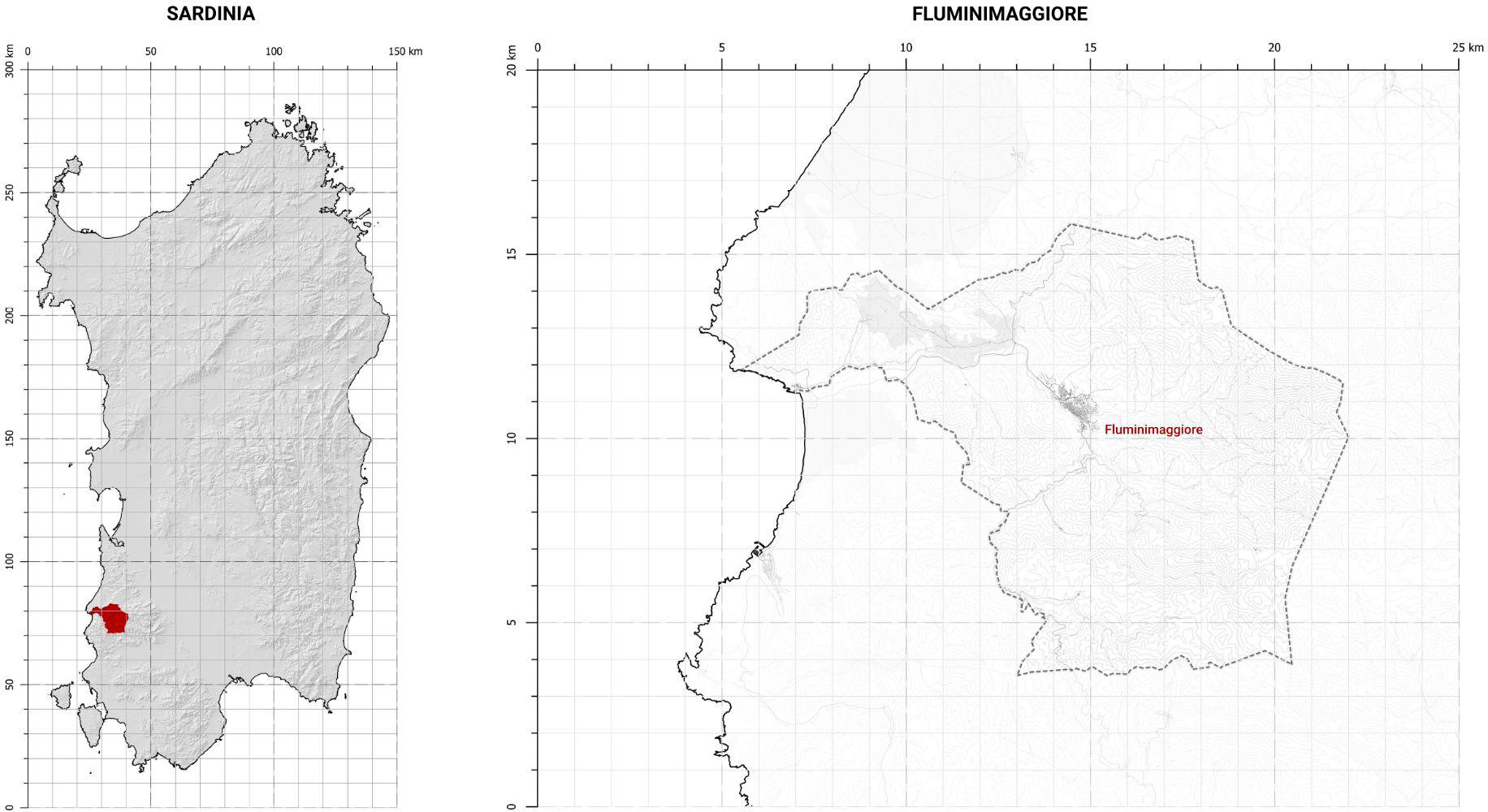
As of 2024, Fluminimaggiore has a population of 2,612 residents, covering a municipal area of 108.33 square kilometres, and having a population density of 108.18 inhabitants per square kilometre (ISTAT 2024). The population aged 65 and over comprises 785 individuals, representing 30% of the total population. This figure compares to the national average of 24% and the regional average of 26.2% (ISTAT 2024). Within this age group, 15.9% are between 65 and 75 years old, 9.1% are between 75 and 85, and 5% are over 85. The old-age index stands at 339.6.
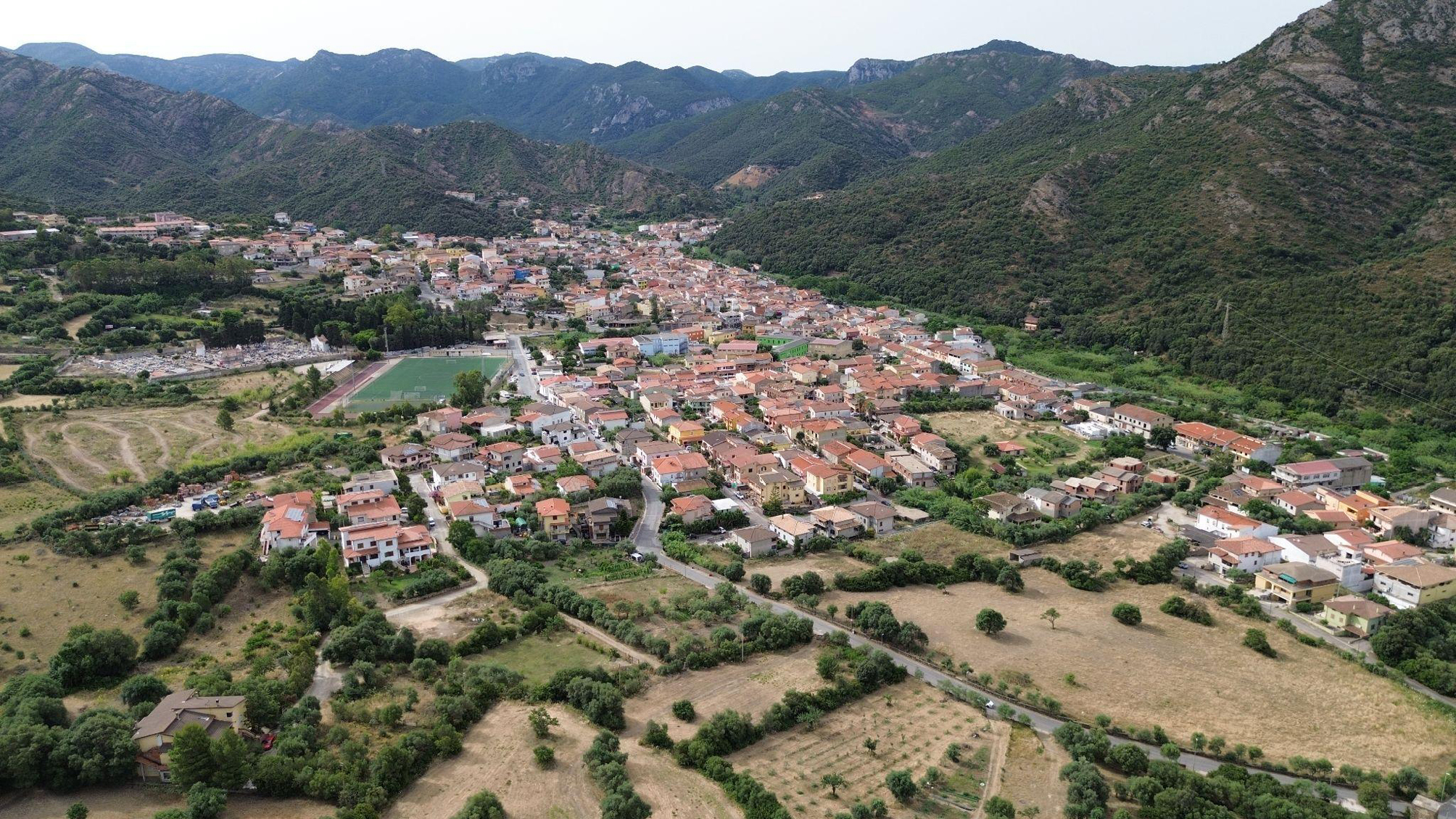
The municipality of Fluminimaggiore, as shown in Figure 3, has a substantial housing stock comprising 2,216 dwellings. Of these,1,210 (54.6 %) are occupied and 1,006 (45.4 %) are vacant (ISTAT 2021).
4.3 The project “Happy Village”
The ‘Happy Village’ project, initiated by the municipality of Fluminimaggiore in 2018, takes an innovative and integrated approach to addressing the social and economic crisis affecting many rural and post-industrial areas (Fenu 2022). By combining architectural restoration with inclusive services for the elderly, the project aims to transform demographic and infrastructural decline into an opportunity for sustainable development and social inclusion.
The words of former mayor Marco Corrias, the promoter of the Happy Village project, shed light on its origins: “A colleague of mine from Il Resto del Carlino, Mario Palumbo, had bought a house here, and I couldn’t understand why he had done so,” he explained. “But why not?” he replied. “It’s a mountain village just ten minutes from the sea, with friendly people, quietness, and the airport a little over an hour away.” That evening, the idea was born: to restore some of the 400 abandoned houses in the village and make them available to those, particularly retirees from the North, who wished to move here. The project would also offer them essential services through a cooperative created and managed by the residents” (Biolchini 2020).
The project centers on the development of a ‘scattered residence’, a reimagined approach to elderly care that aims to repurpose the many abandoned buildings in the community while simultaneously encouraging the influx of new residents, particularly those over 65 from Northern Italy and Northern Europe, attracted by the mild climate and high standard of living.
“The idea was to be able to recover that built heritage, which, being unused, was in danger of being lost without a valid reason” explains Pierluigi Aru, former president of the Fluminimaggiore Community Cooperative, “trying to activate a virtuous circle that, taking advantage of the opportunities of the silver economy, would create a repopulation of the village through the Happy Village project hoping for the restart of the economy and employment”3.
Another ex-president of the cooperative, Paola Angius, stated: “We have also envisioned the possibility of creating micro-communities of friends. Our aim is to combat depopulation, reduce land consumption, and promote a circular economy in the area. Unfortunately, the pandemic significantly slowed down our activities, but this summer we resumed contacting property owners. There is no shortage of interest, and now we are transitioning to the operational phase, starting with the notarial deeds, followed by the renovation work.” (Alfonso 2022).
According to Marco Corrias, the initiative transcends the traditional nursing home model by envisaging a distributed structure throughout the village that simultaneously ensures personalized services to all residents. The management of the Happy Village is envisioned to be in the hands of a Community Cooperative, which not only handles housing recovery but also oversees the entire ecosystem of related services, including health, transportation, and cultural services. This model promotes interaction among residents and fosters social, economic, and cultural integration. Corrias emphasizes the collaborative aspect of the project: “It will require the intelligence and commitment of all residents” (Interview 1). The Cooperative closely collaborates with local entities, such as the Faculty of Architecture at the University of Cagliari and the Association “Città della terra cruda”, to ensure that the architectural recovery is aesthetically faithful, sustainable, and rooted in local building traditions. The project is still in the definition and consultation phase with local realities, aiming to create a network of services offering “turnkey packages” to future residents. Happy Village thus positions itself not only as a solution to demographic decline but also as a replicable model of community revitalization, striving to balance elder care with local development, making the benefits tangible for both individuals and the community.
At the same time, the municipality worked with the local Legacoop, a cooperative federation, on the management phase of the services, which will establish a community cooperative to provide all services.
4.4 A multi-policies approach
To better understand the implementation process, we analyse how the strategies described in the previous paragraph are applied in the case of the Happy Village project.
4.4.1 Architectural and urban Regeneration
The housing renovation project leveraged state funding known as ‘Superbonus 110%, a construction incentive measure introduced on May 19, 2020. This instrument provided for a series of tax benefits, including deductions and refunds, designed to promote the renovation of buildings with the aim of improving their energy efficiency and environmental sustainability. In December 2020, an expression of interest was made for the Ecobonus - Coop Comunità Fluminimaggiore project. This process involved specific steps in the expression of interest process, an initiative designed to exploit the opportunities offered by the Superbonus to encourage the requalification of housing in the local context.
At this stage, Legacoop Sardegna, the Italian federation of cooperatives, stepped into a pivotal role, coordinating a group of companies to facilitate the acquisition of tax credits by cooperative members. This mechanism was designed to enable homeowners to benefit from zero-cost renovations. However, despite its promising premise, the project encountered significant administrative and management difficulties that hindered its full realization through the 110% Superbonus. Although a preliminary design phase was initiated to access funding, this process did not see any operational development, leaving the prospects for urban and social regeneration unrealized.
An indicative list of about 24 homes has been identified that fall under a recently revised acquisition model, superseding the previously adopted methods of purchasing the properties. The dwellings are now acquired on a free loan-to-use basis, an arrangement that includes renovating the properties at the cooperative’s expense.
The loan-to-use period generally extends from 12 to 15 years, during which the properties are used for the project, generating sufficient resources to cover the costs of renovation. This model is a sustainable and strategic investment.
At the end of the loan period, the properties are returned to the owners, who retain full decision-making autonomy over their use. However, the model provides for the inclusion of rights of first refusal in favor of the social cooperative: in case of sale or lease, the owners must consult the cooperative first. This system ensures continuity in the use of the properties in line with the project objectives, fostering a balanced and beneficial relationship between the parties involved.
4.4.2 New inhabitants
The project has garnered significant interest, with over 200 inquiries from individuals over the age of 65. As described by the former mayor: “More than two hundred people, primarily from Northern Italy, have already expressed their willingness to relocate here. The rules are clear: they must establish residency and spend most of their time in Fluminimaggiore. We will provide them with all necessary services, constant medical assistance, and, in the future, an emergency healthcare service” (Biolchini 2020).
However, despite this strong initial interest, none of the applications have been accepted to date, and no actual relocations associated with the initiative have occurred. This highlights a discrepancy between potential demand and the project’s tangible outcomes, raising critical questions about organizational challenges and structural barriers that may have hindered its implementation.
4.4.3 Silver economy e community services
To date, the cooperative has established a service center designed to provide a wide range of support services aimed at facilitating household management, garden care, and meeting everyday needs. Among the services offered are interior painting and minor maintenance tasks, gardening and agricultural work, year-round management of secondary homes, domestic cleaning, errand running, companionship for elderly individuals, assistance with medical appointments, and babysitting services.
Particular attention is given to secondary homeowners, for whom the center offers tailored maintenance services for both interior and exterior spaces, irrigation, fence upkeep, handling bureaucratic procedures, and transportation to and from ports or airports. Clients can opt for an annual subscription, customizable to meet their specific needs, ensuring reliable, high-quality services at accessible costs.
In parallel, the cooperative has been actively engaged in a forest management project within the Fluminimaggiore area, through a direct assignment, demonstrating its commitment to enhancing and preserving the local environmental heritage.
Additionally, the cooperative has initiated an experimental telemedicine project involving 10 residents. This initiative reflects its innovative approach to addressing healthcare needs in remote areas, leveraging technology to improve access to medical services.
Given the absence of new residents, the services currently provided are only marginally aligned with the principles of the silver economy. Instead, they are predominantly focused on home-related services. The experimentation with telemedicine, while promising, remains in its early stages, highlighting the need for further development and integration into the broader service ecosystem.
4.4.4 Community Cooperatives
Since 2018 in Sardinia the law “Azioni generali a sostegno delle cooperative di comunità”: regulates the community cooperatives. The main subjects of the law are: 1. For the purposes of this law, cooperative societies are defined as “community cooperatives” that explicitly aim to bring benefits to a community to which members belong or elect as their own. This objective is achieved through producing goods and services aimed at a stable impact on the community’s social and economic life. 2. Community cooperatives aim to increase employment opportunities, create new income opportunities, and, more generally, strengthen the economic and social fabric of the communities concerned through the production and management of goods and services aimed primarily at satisfying the needs of their citizens. In pursuing this goal, cooperatives value human resources, traditions, and cultural and environmental heritage in the community.4
The cooperative was established in September 2020, initially comprising 25 members with an average age of 52.6 years. Today, it has grown to include 345 members, divided as follows: 172 worker-members, 16 enterprises (operating in construction, tourism, material supply, and citizen services), 2 cultural associations, 13 supporting members, and 142 ordinary members (COOPSTARTUP 2024).
From the founding act, particularly Article 4, the cooperative’s primary objectives emerge clearly. The central goal is the Happy Village Project, designed to combat depopulation in the village by acquiring unused housing and repurpose it for new residents. These new inhabitants will receive tailored services to support their integration and enhance the community’s vitality.
The cooperative is also committed to managing tourism services in an ecologically sustainable manner while promoting the preservation of the area’s rich archaeological, historical, mining, and environmental heritage. Emphasis is placed on water resource management through sustainable and ecological practices. Another key objective is efficient waste management, focusing on recycling and reuse to minimise environmental impact while ensuring a balance between ecological sustainability and economic efficiency.
A vital aspect of the cooperative’s mission is promoting use of digital technologies by integrating technology into all activities and services to improve the community’s quality of life. Regarding practical initiatives, the cooperative will take responsibility for maintaining the village and surrounding land and establishing an eco-friendly local transportation network powered by renewable energy sources.
Additionally, the cooperative aims to identify and manage renewable energy resources in line with a comprehensive environmental sustainability strategy. Providing home care for the elderly, disabled individuals, and people facing various challenges is another key priority. This includes managing foster homes and facilities for socially relevant activities. Furthermore, the cooperative is dedicated to managing sports and cultural spaces and organizing activities with a particular focus on engaging young people, fostering their participation, and strengthening their connection to community life.
5. Discussion and conclusion
The Happy Village project in Fluminimaggiore aimed to tackle the dual challenges of rural depopulation and the ageing population through an innovative and integrated approach that combined architectural restoration, inclusive services for the elderly, and active community engagement. The project sought to rejuvenate the village by repurposing abandoned structures into a “scattered residence” model, designed to attract retirees from Northern Italy and Northern Europe by offering a mild climate and high living standards. However, despite its ambitious vision, the project encountered several significant challenges that ultimately led to its incomplete fulfilment.
One major issue was the financial sustainability of the architectural and urban regeneration efforts. The expected influx of new residents did not adequately offset the high costs of renovating and maintaining these dispersed residences. This led to budgetary constraints and incomplete restoration efforts, undermining the project’s foundation. The project’s financial model heavily relied on attracting many new residents, which did not materialise to the extent necessary to sustain the services and infrastructure.
The initiative also aimed to draw in new inhabitants, including multi-local residents and recreational migrants, who were expected to bring fresh perspectives on locality and authenticity. These groups were anticipated to connect the local context with their social and economic networks, infusing new life into the village. However, cultural differences and local resistance to change significantly hindered the integration of these new inhabitants. The locals were sceptical about the benefits of the project and were hesitant to participate actively, which limited the social cohesion and engagement necessary for the project’s success.
The project’s silver economy strategy focused on leveraging the economic potential of the elderly population by attracting retirees and providing affordable housing, healthcare, and social services. This approach aims to promote local economic development and counteract rural depopulation. Despite these efforts, the expected economic benefits did not materialise. The influx of retirees was insufficient to sustain the local economy, and integrating silver economy initiatives into the broader community proved challenging. This highlighted the difficulties of implementing such models locally.
The project is currently at a critical juncture, with the community cooperative – an essential pillar of the Happy Village initiative – beginning to operate through a range of services aimed at both homeowners and the local community. This phase represents a decisive moment to translate the project’s vision into concrete actions capable of addressing the territory’s needs. However, the cooperative has encountered significant challenges in managing and coordinating its activities, particularly due to the complexity of the distributed service model and the diverse needs of elderly residents. These difficulties have undermined the initiative’s effectiveness, hindering its ability to deliver services efficiently and consistently.
The recent leadership change, with the former mayor assuming the role of president, could present an opportunity to revitalise the project, bringing new energy and a refreshed vision. To ensure the success of this initiative, the involvement of private investors or public funding would be crucial to kick-start the restoration of a select number of housing units, initiating a virtuous cycle of urban and social regeneration. The redevelopment of attractive and functional housing could facilitate the settlement of new residents and foster greater engagement from the local community.
Moreover, diversifying the housing offer to include not only elderly individuals but also groups such as digital nomads could significantly enhance the project’s appeal. This strategy would cater to a more heterogeneous audience, which often seeks less formal housing standards but is drawn to authentic and dynamic environments. Simultaneously, streamlining the processes for property renovation and acquisition would make the entire endeavour more feasible and sustainable, reinforcing the foundations for the village’s revitalisation.
In conclusion, the case of the Happy Village in Fluminimaggiore offers valuable lessons for future rural revitalisation projects. It underscores the importance of realistic financial planning, effective management structures, and genuine community engagement. The project also highlights the necessity of adaptive policy frameworks that can support such initiatives. Future endeavours can benefit from these insights by adopting more sustainable financial models, investing in robust management capabilities, fostering community participation, and working closely with policymakers to create supportive regulatory environments. By learning from the challenges faced by the Happy Village project, similar initiatives can better navigate the complexities of rural revitalisation and demographic strategy projects, ultimately achieving more sustainable and impactful outcomes.
References
Alfonso, L. (2022, November 18). Happy Village, con il bando Coopstartup rinasce un paese. Vita. Retrieved from https://www.vita.it/vita-a-sud/happy-village-con-il-bando-coopstartup-rinasce-un-paese/
Angelini, L., Carrino, S., Abou Khaled, O., Riva-Mossman, S., Mugellini, E. (2016). Senior Living Lab: An Ecological Approach to Foster Social Innovation in an Ageing Society. Future Internet, 8(4), 50. https://doi.org/10.3390/fi8040050
Barca, F., Casavola, P., Lucatelli, S. (2014). Strategia nazionale per le Aree interne: definizione, obiettivi, strumenti e governance. Materiali Uval, 31.
Biolchini, V. (2020, November 25). Dopo le miniere, Fluminimaggiore rinasce con la coop di comunità. Vita. Retrieved from https://www.vita.it/vita-a-sud/dopo-le-miniere-fluminimaggiore-rinasce-con-la-coop-di-comunita/
Buffel, T., Phillipson, C., & Scharf, T. (2012). Ageing in urban environments: Developing ‘age-friendly’ cities. Critical Social Policy, 32(4), 597-617. https://doi.org/10.1177/0261018311430457
Canada, P. H. A. of. (2006). Age-Friendly Rural and Remote Communities: A Guide [Navigation page; education and awareness]. https://www.canada.ca/en/public-health/services/publications/healthy-living/friendly-rural-remote-communities-a-guide.html
Carlucci, C., Lucarelli, S. (2013). Aree Interne: Un potenziale per la crescita economica del Paese. Agriregionieuropa, 34, 17-20. https://agriregionieuropa.univpm.it/it/content/article/31/34/aree-interne-un-potenziale-la-crescita-economica-del-paese
Chiodelli, F. (2010). “Enclaves” private a carattere residenziale: Il caso del “cohousing”. Rassegna Italiana di Sociologia, 1, 95-116. https://doi.org/10.1423/31732
Coopstartup (2025). https://www.coopstartup.it/coopstartup/startup-cooperative/cooperativa-di-comunita-fluminimaggiore/
Delon, M., Graziano, T. (2023). L’iniziativa “case a un euro” contro la marginalità territoriale in Italia: Mercificazione o rivitalizzazione? Bollettino della Società Geografica Italiana, serie 14, 6(1), 17-29. https://doi.org/10.36253/bsgi-7464
Dematteis, M. (2017). Via dalla città. La rivincita della montagna. Roma, DeriveApprodi.
Eatock, D. (2015). The silver economy. Opportunities from ageing. EPRS | European Parliamentary Research Service. https://www.europarl.europa.eu/RegData/etudes/BRIE/2015/565872/EPRS_BRI(2015)565872_EN.pdf
European Network for Rural Development (ENRD) (2018). Smart villages revitalising rural services. Retrieved from https://ec.europa.eu/enrd/sites/default/files/enrd_publications/publi-enrd-rr-26-2018-en.pdf
European Spatial Planning Observation Network (ESPON) (2017). Policy Brief: Shrinking rural regions in Europe. https://archive.espon.eu/sites/default/files/attachments/ESPON%20Policy%20Brief%20on%20Shrinking%20Rural%20Regions.pdf
European Spatial Planning Observation Network (ESPON) (2021). The ageing revolution: towards a European Silver Deal? Demographic transformations for age-friendly territories. https://archive.espon.eu/sites/default/files/attachments/ESPON%20Policy%20Brief%2C%20The%20Ageing%20Revolution%20-%20WEB.pdf
European Union (EU) (2024a). Demography of Europe – 2024 edition (European Union). https://ec.europa.eu/eurostat/cache/interactive-publications/demography/2024/00/index.html
European Union (EU) (2024b). Population structure and ageing. https://ec.europa.eu/eurostat/statistics-explained/index.php?title=Population_structure_and_ageing
European Commission (2015). Growing the european silver economy.
European Commission (2024). A long-term Vision for the EU’s Rural Areas – Towards stronger, connected, resilient and prosperous rural areas by 2040 (Commission Communication COM-2021-0345). https://eur-lex.europa.eu/legal-content/EN/TXT/HTML/?uri=CELEX:52021DC0345
Fenu, N. (2020). Strategie per territori a bassa densità nelle aree interne della Sardegna. I casi di Nughedu Santa Vittoria e Ollolai. ArcHistoR: Un paese ci vuole. Studi e prospettive per i centri abbandonati e in via di spopolamento, 7, 1767-1779. https://doi.org/10.14633/AHR293
Fenu, N. (2022). Territorial regeneration and housing policies: Experiences and policies in the inner areas. Sustainable mediterranean construction. land culture, research and technology, 15, 81-88.
Fondazione Montagne Italia (FMI) (2015). Rapporto Montagne Italia. Roma, FMI. https://uncem.it/wp-content/uploads/2020/04/RAPPORTO-MONTAGNE-ITALIA-2015.pdf
Glasgow, N., Helen Berry, E. (2013). Introduction to Rural Aging in Twenty-First Century America. In Glasgow, N., Helen Berry, E. (eds.). Rural Aging in 21st Century America. Dordrecht, Springer Netherlands, 1-13. https://doi.org/10.1007/978-94-007-5567-3_1
Giossi, G. (2022, febbraio 16). Il secondo tempo della cooperazione di comunità. cheFare. https://www.che-fare.com/almanacco/politiche/comunita/il-secondo-tempo-della-cooperazione-di-comunita-dal-rammendo-allinvestimento/
Jeste, D., Blazer, D., Buckwalter, K., Cassidy, K.-L., Fishman, L., Gwyther, L., Levin, S., Phillipson, C., Rao, R., Schmeding, E., Vega, W., Avanzino, J., Glorioso, D., Feather, J. (2016). Age-Friendly Communities Initiative: Public Health Approach to Promoting Successful Ageing. The American Journal of Geriatric Psychiatry, 24(12), 1158-1170. https://doi.org/10.1016/j.jagp.2016.07.021
Keating, N., Eales, J., & Phillips, J. E. (2013). Age-Friendly Rural Communities: Conceptualizing ‘Best-Fit’*. Canadian Journal on Ageing / La Revue Canadienne Du Vieillissement, 32(4), 319-332. https://doi.org/10.1017/S0714980813000408
Kohlbacher, F., Herstatt, C. (eds. 2011). The Silver Market Phenomenon. Berlin, Springer. https://doi.org/10.1007/978-3-642-14338-0
Koine. (2024). Anzianità Casentino – Koinè cooperativa sociale. https://www.koine.org/anzianita-casentino
Labus, A. (2016). Senior Cohousing In Cross-Cutting Research. Architecture, Civil Engineering, Environment, 9(4), 21-31. https://doi.org/10.21307/acee-2016-049
Larsen, H. G. (2019). Three phases of Danish cohousing: Tenure and the development of an alternative housing form. Housing Studies, 34(8), 1349-1371. https://doi.org/10.1080/02673037.2019.1569599
Leder, F., Verdini, G., Durante, C. (2010). Cohousing di pianura. Ripensare l’abitare in chiave solidale e a zero consumo di suolo. Territorio, 52, 68-72. https://doi.org/10.3280/TR2010-052011
LEGACOOP (2011). Cooperative di Comunità. Legacoop Nazionale. Retrieved from https://www.legacoop.coop/cooperative-di-comunita/
Lehning, A. J., Smith, R. J., Dunkle, R. E. (2014). Age-friendly environments and self-rated health: An exploration of Detroit elders. Research on Ageing, 36(1), 72-94. https://doi.org/10.1177/0164027512469214
Leitfaden Seniorengenossenschaften. (2024). Retrieved 16 June 2024, from https://assets-eu-01.kc-usercontent.com/c1c45d5a-c794-01a3-3c24-89f77bf8cab4/806dc161-4e8e-4e8a-a46e-27b6ffd6a042/Leitfaden%20Seniorengenossenschaften.pdf
Lui, C.-W., Everingham, J.-A., Warburton, J., Cuthill, M., Bartlett, H. (2009). What makes a community age-friendly: A review of international literature. Australasian Journal on Ageing, 28(3), 116-121. https://doi.org/10.1111/j.1741-6612.2009.00355.x
Mastronardi, L., Romagnoli, L. (2020). Community-Based Cooperatives: A New Business Model for the Development of Italian Inner Areas. Sustainability, 12(5), 2082. https://doi.org/10.3390/su12052082
Mori, P. A., Sforzi, J. (2018). Imprese di comunità: Innovazione istituzionale, partecipazione e sviluppo locale. Bologna, Il Mulino.
Morrow, K. M., Roeger, W. (1999). The Economic Consequences of Ageing Populations. Bruxelles, European Commission.
Musolino, M. (2015). Ritorno al vicinato. Co-housing e nuova convivialità urbana a Torino. Scienze Del Territorio, 3, 283-291. https://doi.org/10.13128/Scienze_Territorio-16281
Niemczyk, A., Szalonka, K., Gardocka-Jałowiec, A., Nowak, W., Seweryn, R., Gródek-Szostak, Z. (2023). The Silver Economy: An Ageing Society in the European Union. Milton Park (UK), Taylor & Francis.
Paniccia, P. (2012). Nuovi fermenti di sviluppo sostenibile nel turismo: L’esempio dell’“albergo diffuso”. Tra borghi storici, residenze d’epoca e antichi casali rurali. Impresa Progetto – Electronic Journal of Management, 1, 1-26.
Pauhofova, I., Dovalova, G. (2015). Potential of Silver Economy in the European Union. European Scientific Journal, ESI, 11(10), 190-205. Retrieved from https://eujournal.org/index.php/esj/article/view/6149
Pedersen, M. (2015). Senior Co-Housing Communities in Denmark. Journal of Housing For the Elderly, 29(1-2), 126-145. https://doi.org/10.1080/02763893.2015.989770
Pettenati, G. (2021). I nuovi montanari. Il Mulino, 6(20), 977-983. https://www.rivistailmulino.it/a/i-nuovi-montanari
Pezzi, M. G., Urso, G. (2018). Innovazione sociale e istituzionalizzazione: L’esempio delle cooperative di comunità nell’area interna dell’Appennino Emiliano. Territorio, 56, 93-100.
Phillipson, C. (2013). Ageing. Hoboken (New Jersey), John Wiley & Sons.
Prettner, K. (2013). Population Aging and Endogenous Economic Growth. Journal of Population Economics, 26(2), 811-34. https://doi.org/10.1007/s00148-012-0441-9
Prettner, K. (2021). Population Ageing and Endogenous Economic Growth. Institut Für Demographie - VID, 1, 1-31. https://doi.org/10.1553/0x003d08f8
Regione Autonoma della Sardegna, Legge Regionale 2 agosto 2018, n. 35, “Azioni generali a sostegno delle cooperative di comunità”.
Ratnayake, M., Lukas, S., Brathwaite, S., Neave, J., Henry, H. (2022). Ageing in Place: Are We Prepared? Delaware Journal of Public Health, 8(3), 28-31. https://doi.org/10.32481/djph.2022.08.007.
Rizzini, C. L. (2016 March 17). Cohousing: A solution for the Elderly? Secondo Welfare. https://www.secondowelfare.it/privati/investimenti-nel-sociale/cohousing-a-solution-for-the-elderly/n
Robinson, D., Green, S., Wilson, I. (2020). Housing options for older people in a reimagined housing system: A case study from England. International Journal of Housing Policy, 20(3), 344-366. https://doi.org/10.1080/19491247.2019.1644020
Sanguinetti, A. (2015). Diversifying cohousing: The retrofit model. Journal of Architectural and Planning Research, 32(1), 68-90.
Sharpe, A. (2011). Is Ageing a Drag on Productivity Growth? A Review Article on Ageing, Health and Productivity: The Economics of Increased Life Expectancy. International Productivity Monitor, 21, 82-94.
Shucksmith, M. (2003). Social Exclusion in Rural Areas: A Review of Recent Research. Report to DEFRA, Countryside Agency and ESRC.
Skinner, M. W., Cloutier, D., Andrews, G. J. (2015). Geographies of ageing: Progress and possibilities after two decades of change. Progress in Human Geography, 39(6), 776-799. https://doi.org/10.1177/0309132514558444
United Nations Department For Economic And Social Affairs (UNDESA). (2023). World Population Prospects 2022: Summary of Results. New York, United Nations.
United Nations Department For Economic And Social Affairs - UNDESA. (2025). World Population Prospects 2024: Summary of Results. New York, United Nations.
Van Hoof, J., Marston, H. R., Kazak, J. K., Buffel, T. (2021). Ten questions concerning age-friendly cities and communities and the built environment. Building and Environment, 199, 107922. https://doi.org/10.1016/j.buildenv.2021.107922
Vasileios, M. (2019). Demographic trends in EU regions. EPRS | European Parliamentary Research Service. https://www.europarl.europa.eu/RegData/etudes/BRIE/2019/633160/EPRS_BRI(2019)633160_EN.pdf
Weil, J. (2017). Ageing in rural communities: Older persons’ narratives of relocating in place to maintain rural identity. Online Journal of Rural Research & Policy, 12(1). https://doi.org/10.4148/1936-0487.1076
WHO (World Health Organization, 2015). World Report on Ageing and Health. World Health Organization.
WHO (World Health Organization, 2017). Age-friendly environments in Europe: A handbook of domains for policy action. World Health Organization. Retrieved from https://extranet.who.int/agefriendlyworld/wp-content/uploads/2018/01/AFEE-handbook-FINAL.pdf
WHO (World Health Organization, 2018). Age-friendly environments in Europe: Indicators, monitoring and assessments. World Health Organization. https://iris.who.int/bitstream/handle/10665/334284/WHO-EURO-2020-1088-40834-55192-eng.pdf?sequence=1
WHO (World Health Organization, 2024). Ageing. https://www.who.int/health-topics/ageing
Wilbur, A. (2013). Growing a Radical Ruralism: Back-to-the-Land as Practice and Ideal. Geography Compass, 7(2), 149-160. https://doi.org/10.1111/gec3.12023
3 See the following link: https://ambiente.tiscali.it/lemeraviglie/articoli/happy-village-fluminimaggiore/
4 Legge Regionale 2 agosto 2018, N. 35 Azioni generali a sostegno delle cooperative di comunità.